The Freedom and Joy of Driving Through South Australia’s Rural Country Towns
Shôn Ellerton, January 22, 2025
One of my little ways of escaping is to drive off into the countryside exploring the small towns in rural South Australia.
I’ve always enjoyed taking road trips into little country towns. Being situated in Adelaide, I took many opportunities to travel around the beautiful state of South Australia.
There’s just so much to see in this vast sparsely populated land which makes each trip a memorable affair. Most of the country towns I’ve visited is easily no more than a couple, or at the most, a few hours from busy Adelaide. However, let me briefly explain South Australia’s geography.
South Australia is huge, being nearly twice the size of Texas, with a population density of less than 5 people per square mile. That’s considerably less than the US state of Montana which currently sits at 8 people per square mile.
South Australia enjoys a variety of climates, from a pleasant Mediterranean climate in the south to a fairly harsh and arid environment across most of its northern pastoral area which also boasts the iconic Lake Eyre, one of the most famous and largest inland ephemeral, or temporary, lake which, bizarrely enough, even has its own yacht club.
South Australia can roughly be divided into three zones of population density.
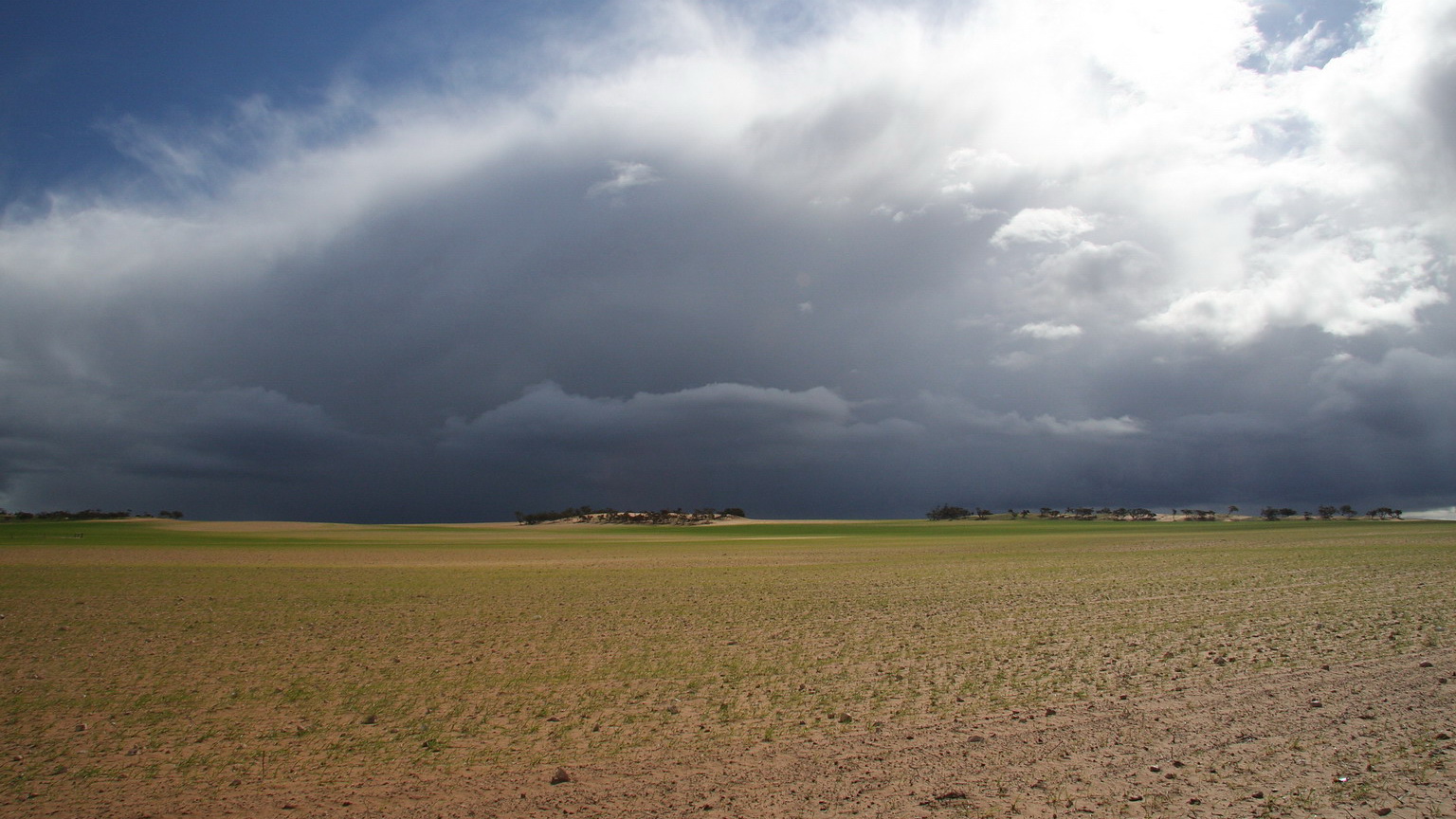 Looming storm clouds near Mannum
The first zone, is Adelaide, South Australia’s only city, the next sized town being a mere thirty thousand people. This is a city of a million people enjoying that quite pleasant Mediterranean climate. Despite its relatively much smaller size to other capital cities around the world, Adelaide has been caught up in a time loop for decades regarding its road and rail infrastructure making it surprisingly frustrating to get from one end of the city to the other. Probably exacerbated by some of the older, retired, and more affluent locals who often protest against new infrastructure development schemes. They often mutter that overused class line, ‘We don’t want to be like Melbourne’. With newer and fresher blood coming into Adelaide, it has only been fairly recent that Adelaide has begun to shape itself up with new and exciting road and rail initiatives. It takes time. Especially in Australia!
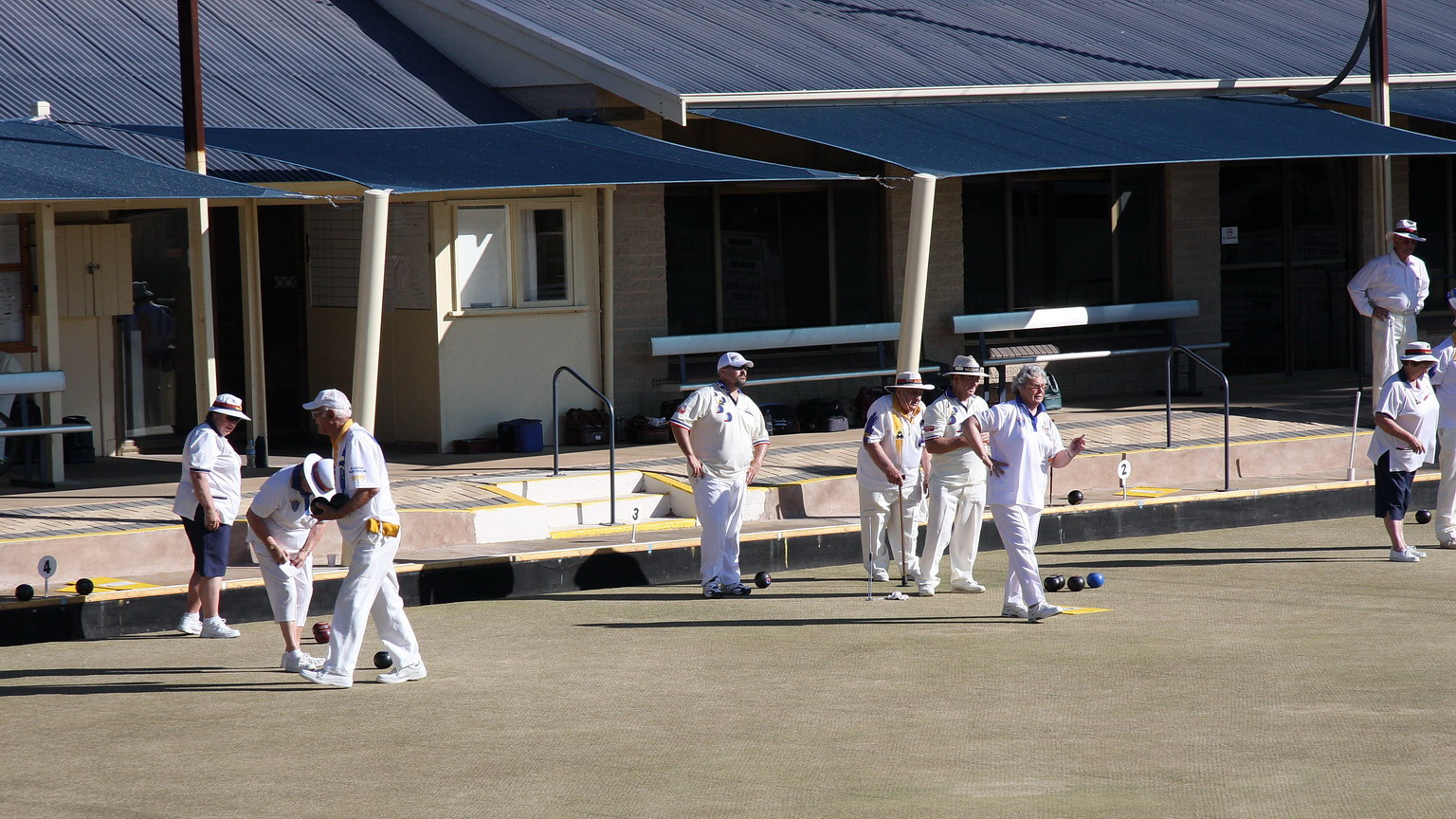 The ubiquitous bowling green. This one is at Moonta.
The second zone is what I call, the ‘liveable’ rural area. I’d say about a third of South Australia could be considered liveable with most of that area being in the south part of the state near the ocean coastline and along the Murray River basin. This area is dotted with small local communities ranging from popular and well-kept townships to forgotten and forlorn looking hamlets that have seen better days. Usually as a result from bad decisions made in the past to dismantle railway corridor routes by making short-sighted assumptions that it was not necessary to keep them because of the advent of road travel. The dismantled line between Murray Bridge and Loxton with its string of near dead towns is a testimony to this failure created by South Australia’s political leaders of the past.
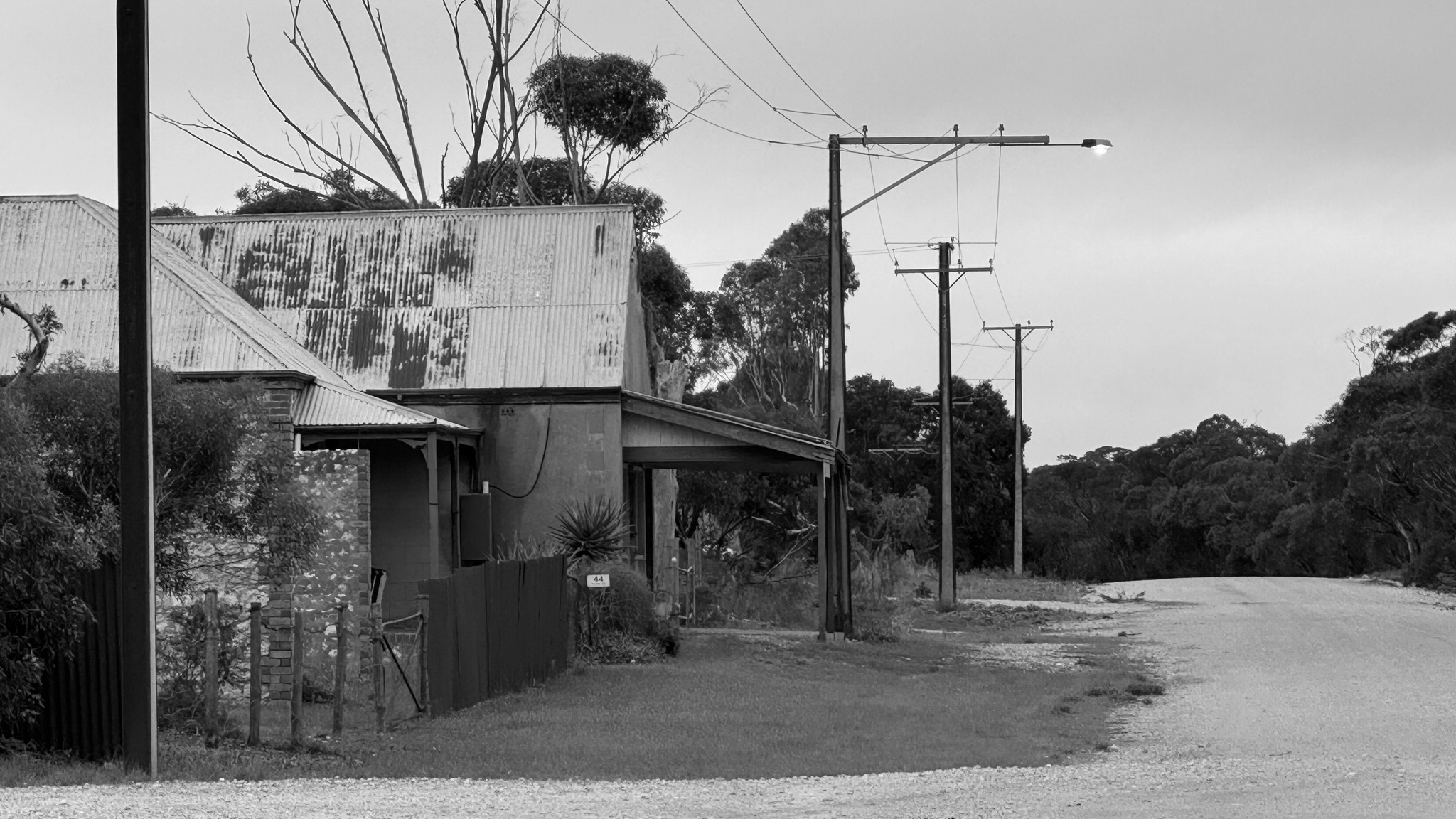 The virtually abandoned town of Sandalwood
The third zone is the largest and, by far, the most arid and inhospitable of them all. Being north of the Goyder Line, a curving line on a map that represents the limit of agricultural living, it is generally dry pastoral land and desert spotted with very remote townships of varying sizes like Woomera, Coober Pedy, Roxby Downs and an array of Aboriginal communities in the far north of the state. Many of these communities were built because of mining, defence-related reasons, or interval stops along the Adelaide to Darwin railway route. Coupled with their remote locations and harsh climates, supplies and services are reliant on long-distance road, rail and air. Alice Springs is interesting by the fact that it is a sizeable town of thirty-thousand people with a major airport slap-bang in the middle of the continent surrounded by five million square kilometres of nearly empty Outback.
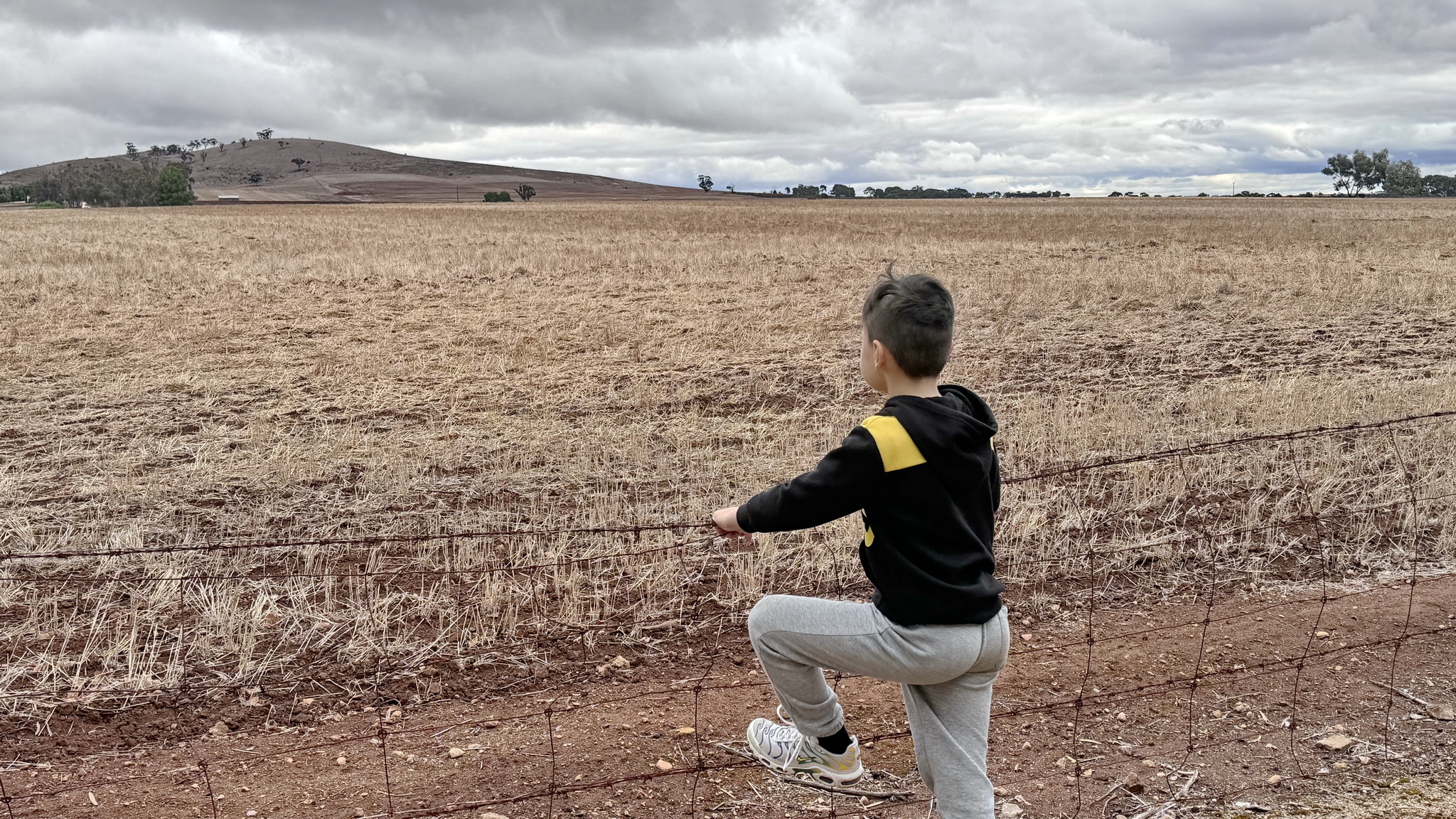 My son looking out across a field near Gladstone
As for starting out my country trips, the first thing I look forward to is the freedom of saying goodbye to that last pesky traffic light, a necessary instrument, of course, to keep traffic safe in urban areas. For me, the presence of traffic lights makes driving more of a task with its continuous head-butting stop-start experience rather than a seamless therapeutic joy while using cruise control out on the open roads. One’s never relaxed when approaching a traffic light. Will it stay green when I get there? Should I speed up to catch it? Is there a speed camera there? It is the road’s representation of a killjoy shackle.
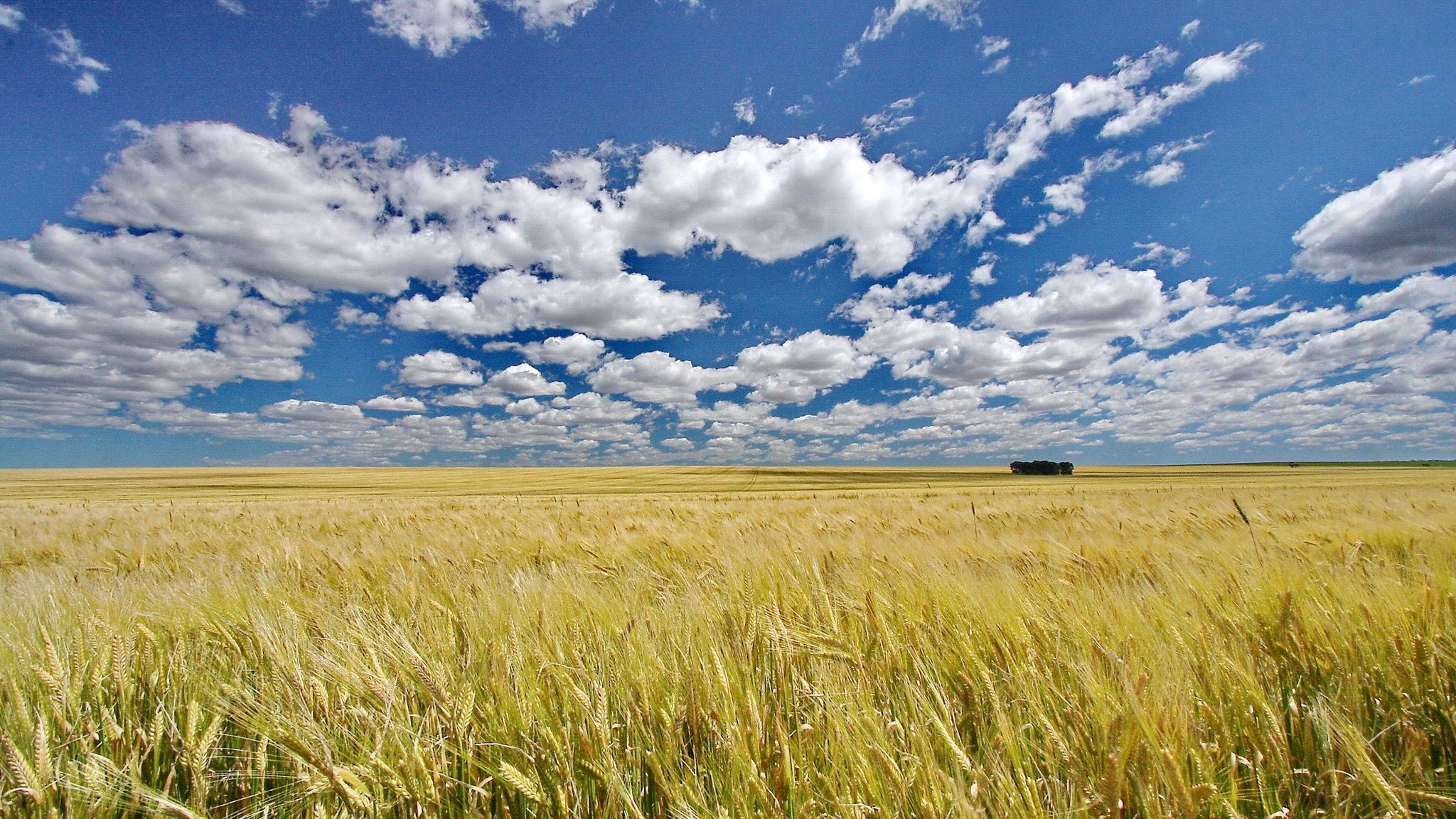 Almost surreal big skies near Clare
Adelaide is, by no means, the only city like this, but within less than a quarter of an hour after driving away from the last traffic light, you are literally in the country on very open roads. The manacles released and free on the road without constantly looking at the back ends of other people’s cars trying to make anagrams from rego plates as a form of entertainment while waiting for traffic lights to turn green. It’s a striking concept in a way. The fact that people urbanise so closely together. New housing communities in the outer suburbs which seem so needlessly packed so tightly together with little in the way of garden space.
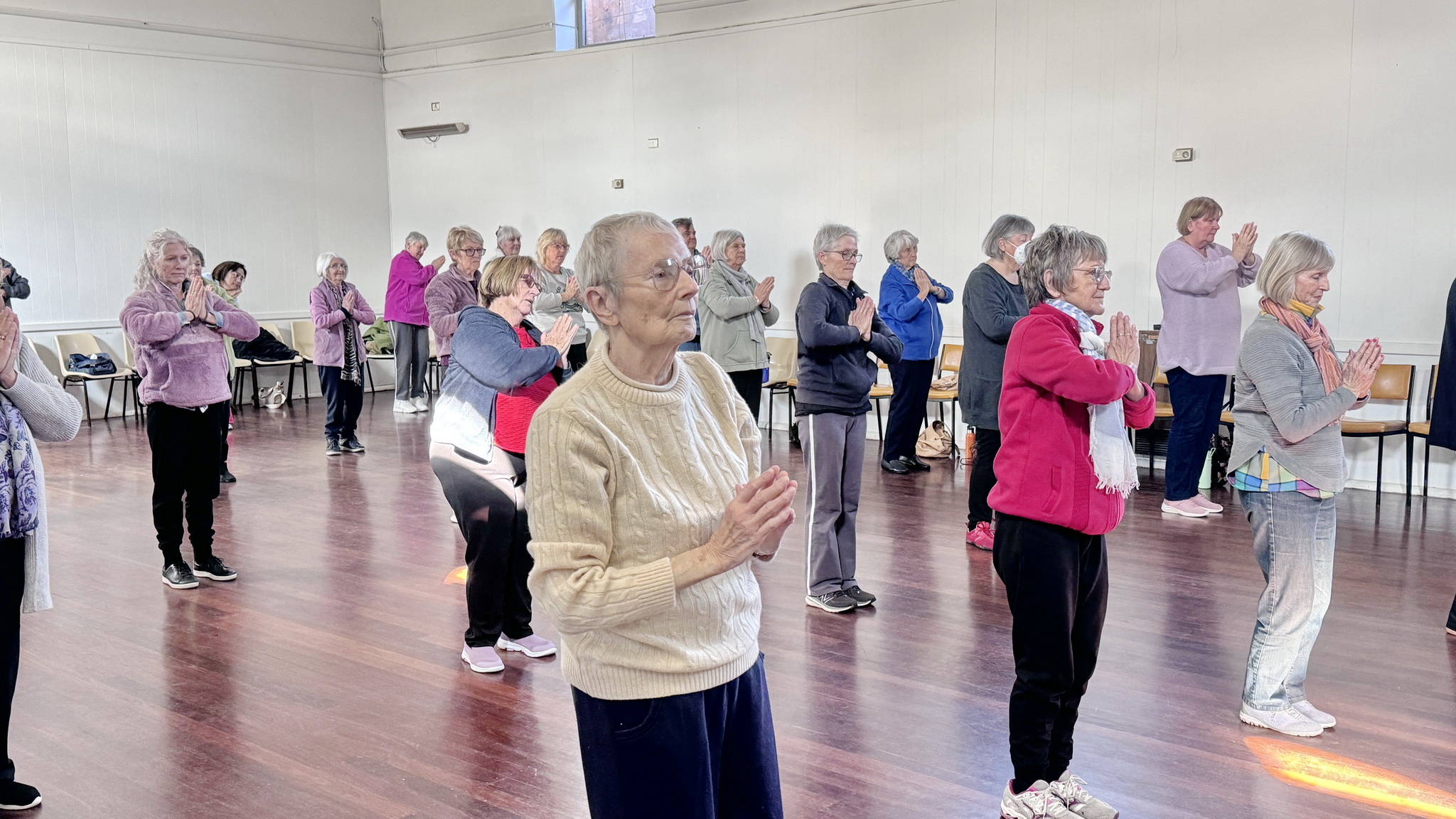 My wife and I hosted a Tai Chi event in Crystal Brook
I drove past one of these new developments in a small town called Two Wells just north of Adelaide and as soon as I headed north out of that town up the single carriageway spine route towards the next township of Mallala and onwards past Balaklava and Blyth, the roads suddenly become empty leaving long straight bits of road in the bush with a myriad of dirt roads seemingly leading to nowhere. Massive plots of land lined with borders of, what look like, broccoli trees. Long-distance freight trains with their mournful klaxons reminding you not to drive across those unprotected level crossings without a careful lookout. Ranch homes dotted here and there, many of them, cosy-looking heritage homes offset from the road by private tree-lined dirt lanes. They often have their own generous bit of acreage with its own copse of trees to provide some shade against the hot summer sun. Old farmyard equipment, a variety of old trucks and cars along with rusty shipping containers are typical features of country living it appears. There are also abandoned homesteads in the middle of nowhere, haunting and curiously photogenic, one of the most famous photographed being situated just out of the little mining town of Burra.
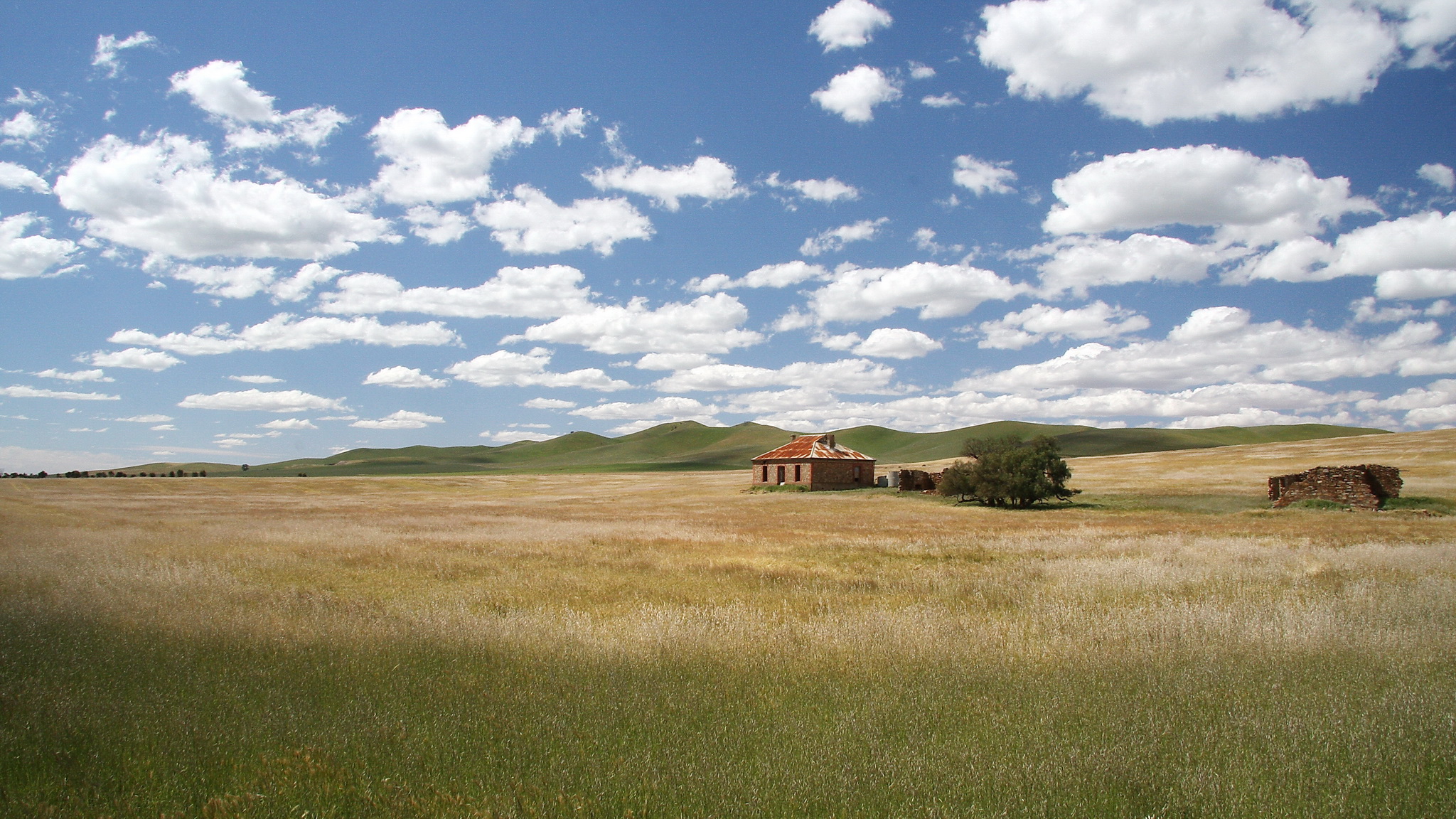 Very popular photo spot of an abandoned house near Burra
Although the road is nearly empty with long stretches of straight bits, there is a speed limit in South Australia ranging from 100 to 110 kph, but it’s not travelling at speed which I enjoy but rather that I can set my cruise control at the legal limit, sit back, and watch the gorgeous scenery flow by. I tend to keep my window down to enjoy the fresh air despite the noise of the wind around my ears. I don’t need to continuously gauge my speed and I don’t need to press the pedal. It’s a bit like flying an aeroplane in a way, something I used to do some years ago.
At times, I switch on the radio. Leaving the urban sprawl sometime back, the FM channels begin to die out leaving only the AM band untouched. It’s often a wonder how strong and robust AM radio is. With its shortcoming on audio quality and being subject to electrical interference, the only thing keeping it viable is its massive range. Cellular technology is still a threat to radio but there are plenty of patches in the country where getting a signal is impossible. Driving on cruise control listening to talk radio keeps me relaxed but also alert enough to drive those very long distances.
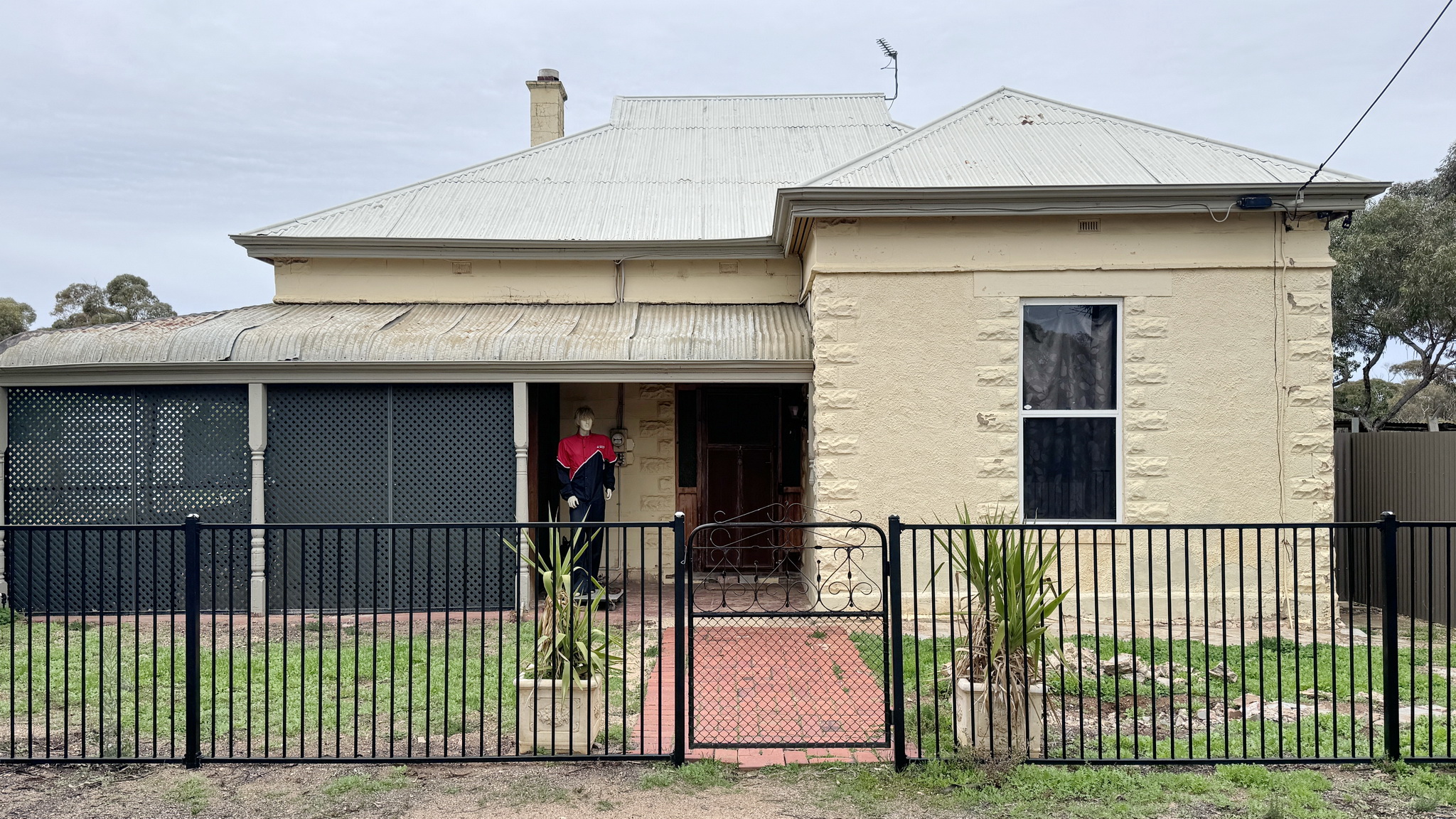 Creepy mannequin guarding a house in Alamoona
Everything seems to slow down in the country and stress is greatly reduced. On the road, it is you, the driver, and no one else reminding me of a line from the lyrics of a popular track out of a classic American 70s rock band called America.
“In the desert, you can remember you name
‘Cause there ain’t no one for to give you no pain”
I guess the only form of stress while driving these roads is the thought of suffering from some mechanical failure or a blown tyre. As for fuel, I never drive on a low tank. I can’t understand how people take chances driving cars with low fuel levels. Two things which I tend to be more on the paranoid side of. Being low on fuel and being late at the airport, much to the dismay of those travelling with me who question why I need to be at the airport three hours before departure.
There’s plenty of time to reflect on some of these things while driving long distances. For example, just how remarkably reliable modern cars are. I’m sure there are many drivers out on the road who have never taken an oil reading or think about taking basic provisions like water in case of breakdown whether it is for drinking or to fill up a dry radiator. As for tyre blowouts, I have a full spare rather than those idiotic spacer tyres which car dealers tend to provide as standard. Spacer tyres, if you’re not in the ‘know’, are those cut-down smaller spare tyres with a maximum speed usually around 80 kph or, if you’re talking ‘old money’, 50 mph. They also don’t feel right when you’re driving with them. Imagine driving a hundred miles on a spacer!
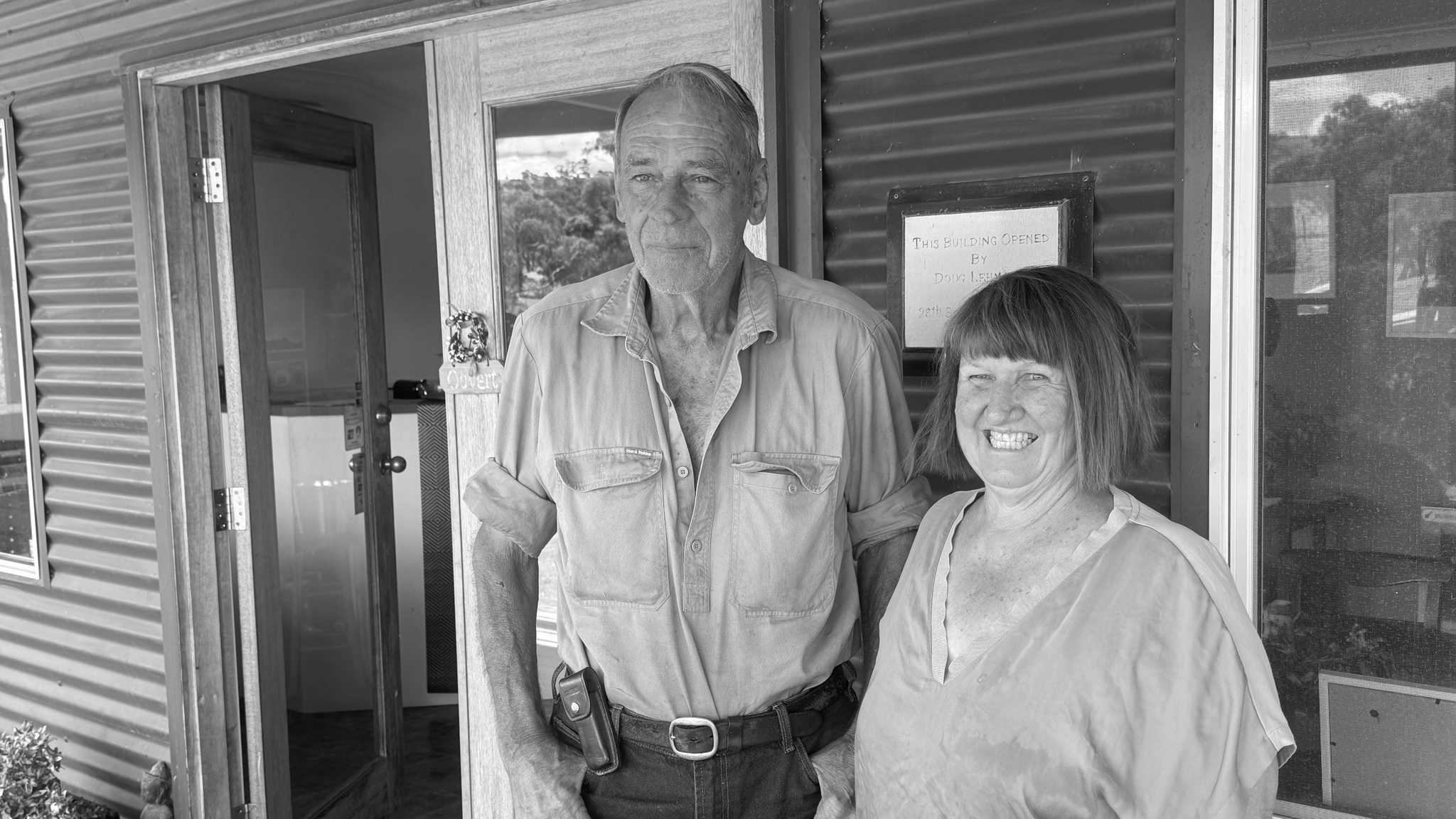 Owners of a winery in the middle of the Flinders Ranges. The man is also a classical pianist and gave us a private concert!
Most country roads in South Australia are single-laned, many of which are quite nicely tarmacked. At least in the so-called liveable rural areas in the south of the state and near the coast. Apart from the larger trunk route connecting Adelaide to Port Augusta, they all pass through small, quaint country towns, each one having its own character. In the United States, for example, driving on the interstate highways is far less interesting as they tend to bypass these country towns, although, doing so, will get you to your destination quicker. I prefer to drive on the smaller roads. There seems to be less traffic and I love driving through the townships.
Some of South Australia’s country towns are remarkably well-kept and presentable reminding me of that nice little quintessential country town in central USA during the 50s as portrayed in so many movies. Wonderfully groomed public parks with surprisingly good children’s playgrounds. Barbecue facilities with free electric heaters that anyone can use. There’s an absence of graffiti and vandalism as well. Beautiful little houses, many of which are heritage, with large quarter acre or larger lot sizes. None of this cramped living which today’s greedy housing development companies capitalise on even though they are situated in the outer suburbs of Adelaide.
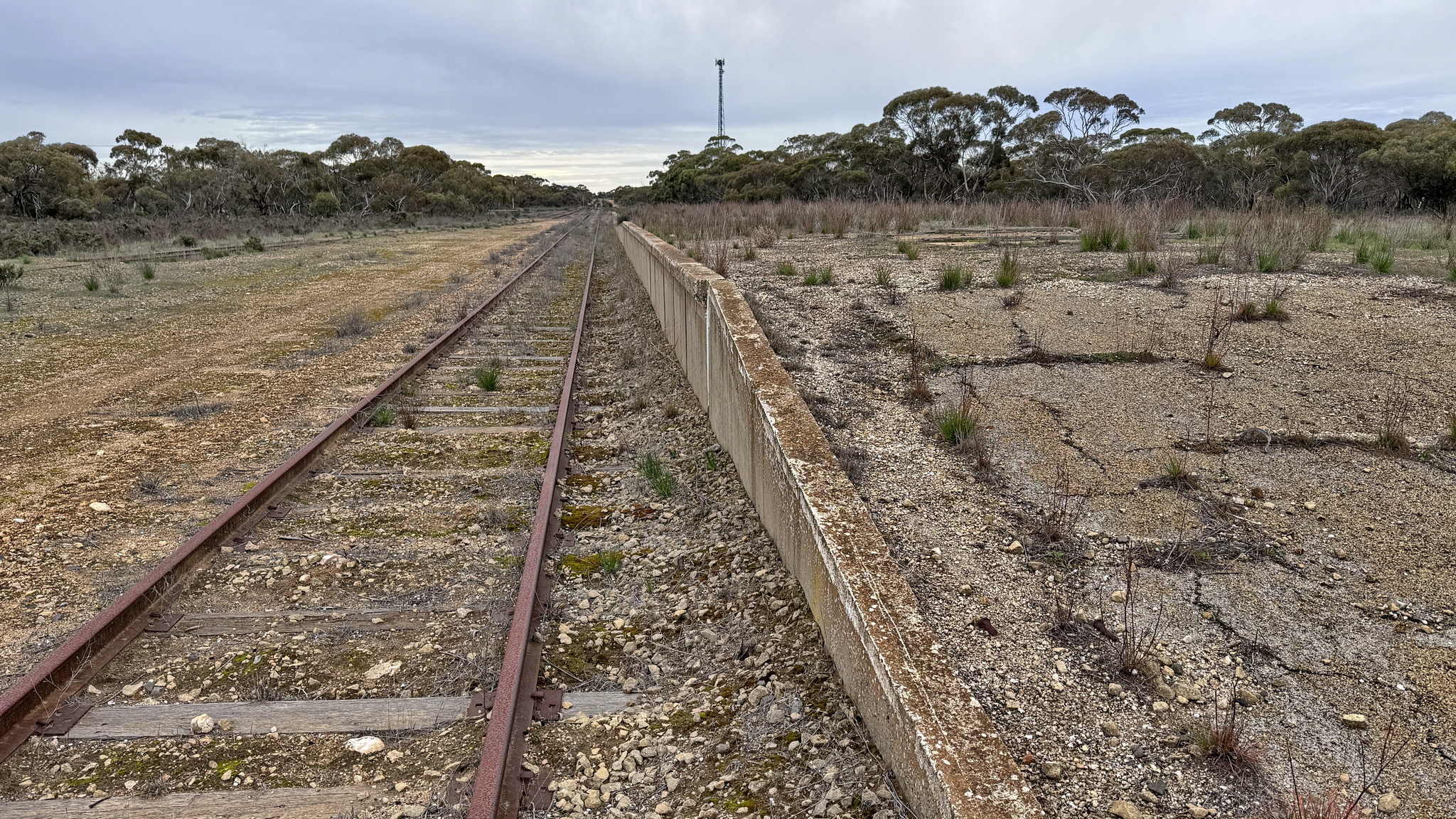 Abandoned railway line between Murray Bridge and Loxton at Alamoona
A mere two hours north of Adelaide, on the coast, is a largish town called Port Pirie comprising of approximately thirty thousand people. It’s main industry is smelting, but as a town, it offers practically everything one needs without venturing into far-off Adelaide, which the locals refer to as the journey to the ‘big smoke’. Although, this is a bit cheeky considering that Port Pirie had gained some notoriety with its higher-than-usual lead emissions from the giant smelting plant. Surrounding Port Pirie are a cluster of charming towns and villages with names like Crystal Brook, Gladstone, Laura, and Port Germain all within easy driving distance from Port Pirie. It seems everyone knows each other across these various townships. It’s not uncommon to strike up a conversation with the locals and then find out that they just happen to know your friend who lives fifteen kilometres down the road in the next village. There are many such clusters around South Australia including those centred around Mount Gambier, the Murraylands basin, and the Copper Triangle. Unlike the cities, people are far more likely to talk to each other because they tend to rely far more on each other than in crowded conurbations.
Having made frequent trips into the country, whether it is for personal or business reasons, I have to mention the peculiar etiquette of acknowledging drivers who fly past you the opposite way. It often involves a quick upwards flick of the four fingers of the hand like saying ‘hello’ but while keeping the thumb on the top of the steering wheel. As I know many of the locals around the Crystal Brook and Gladstone area, I often come across people I know who drive past, and it is seen as good practice to flick a ‘hello’ by this gesture. There’s no hard and fast rule when to do it but, in general, it only applies on open roads with very little traffic or within very small townships. For example, one can never do this in busier areas as it would be totally impractical, tiresome, inconvenient, and even dangerous. Other unwritten rules apply as well. For example, women, for some reason or another, don’t tend to do this, or perhaps, unbeknownst to myself, they only acknowledge other women on the road. Motorcyclists only acknowledge each other. I know this, because I’ve had my share of motorcycles in the past. Same probably holds true for large truck drivers as well. Tourists and urban caravaners seeking escape to the country often don’t know about this practice. In any case, there is that short timeframe before the other vehicle approaches you to assess if it’s ‘worthy’ to acknowledge the oncoming driver.
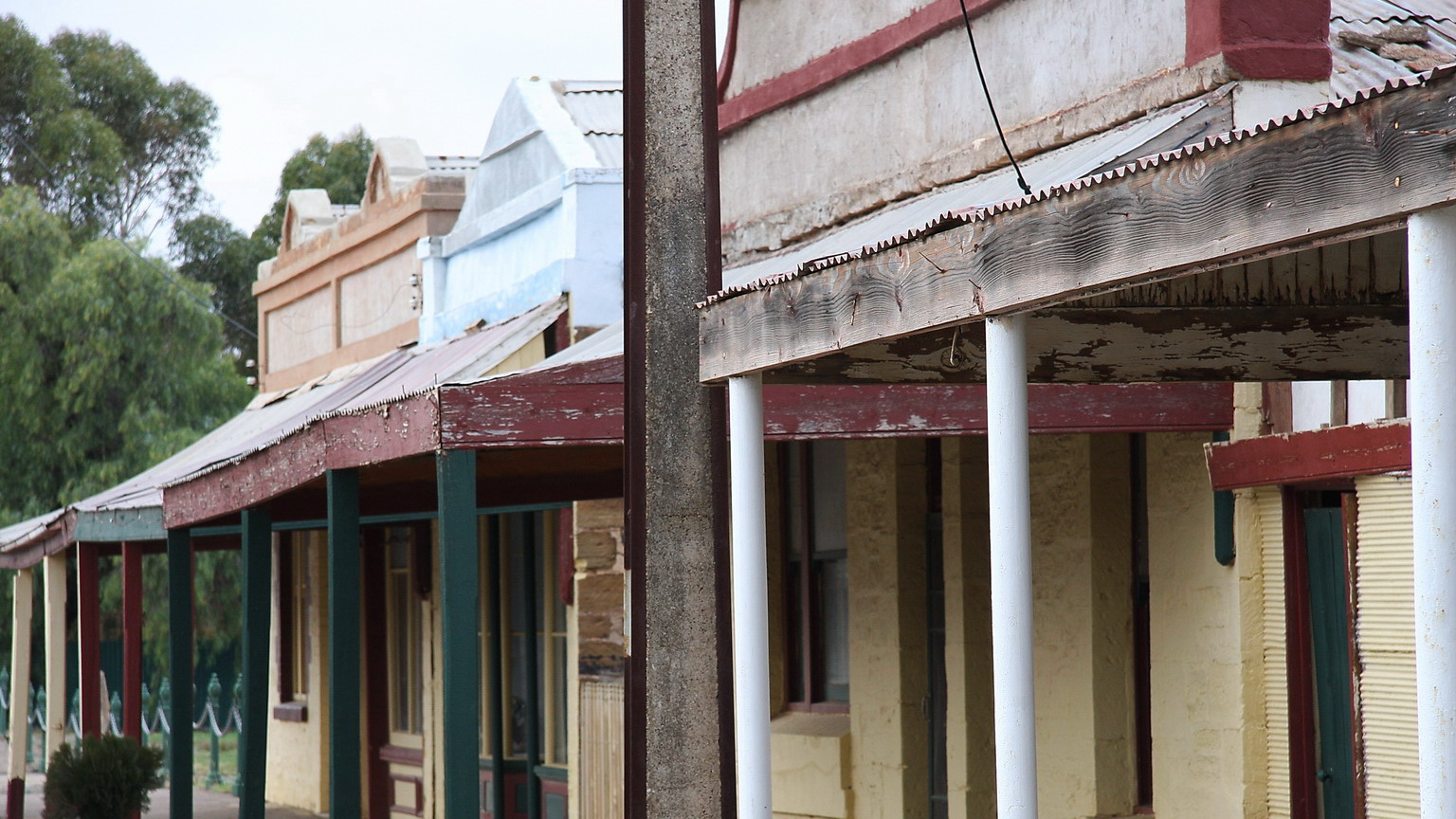 The Wild West look of the haunted town of Terowie
My wife and I had hosted a regional Tai Chi event in Crystal Brook a couple of times in the past years which brought in a good fifty or so people from neighbouring towns and villages. Some even came from Port Augusta, a largish town more than a hundred kilometres north, known for being the ‘crossroads of Australia’. At one of the road junctions in Port Augusta, one can sample the unique experience of being able to stand at the corner of the intersection eyeing the road west to Perth, north to Darwin, and east to Sydney, all with signage indicating vast distances in thousands of kilometres.
Not far from Crystal Brook is the small town of Gladstone with only seven hundred residents. However, it has no less than three good schools, a big sporting complex, an outdoor swimming pool, and one of the few bowling greens with actual real grass rather than the synthetic stuff, which tends to be used in this climate. It also has a pub which was recently bought by a new owner who runs a successful pizza and limo service bringing vitality and life to the township despite the local council not being very helpful by requesting the owner take down his advertisement posted on an old rusty ute (or pickup truck) on a piece of land which he bought in a neighbouring town ten kilometres down the road. I do hate councils with their unnecessary load of bureaucracy and its unwavering adherence to petty rules and regulations even if they are contrary to common sense.
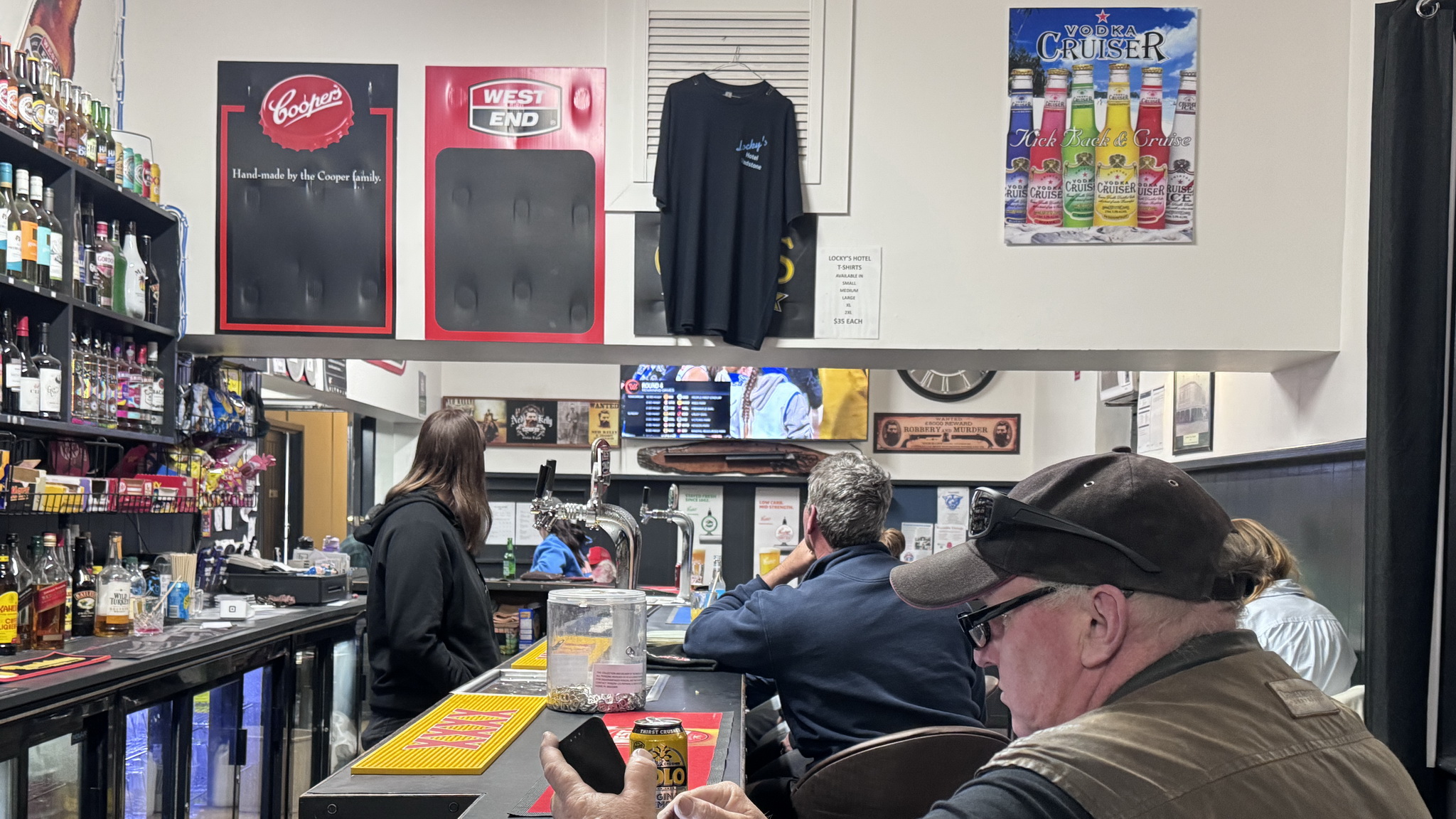 Reopened and much-loved pub in Gladstone offering excellent pizza and limo service.
Ten kilometres north is Laura, an unassuming township with a few shops and a café, but surprisingly, it boasts a hospital, a Mitsubishi dealer and, funny enough, home to South Australia’s most famous ice cream, Golden North. It’s most certainly an unexpected place to find a major ice cream factory. It seems that half of everyone I spoke to in the pub at Gladstone is either a tradie or works for Mitsubishi or Golden North Ice Cream. Interestingly, after speaking to one of the locals, there’s quite a bit of money in these communities. Even despite the discontinued passenger rail service which connected the townships, the last train arriving at Gladstone from Adelaide back in 1987. Like many other country towns, most who drive through Gladstone only see the edge of the town. Blink and you miss it!
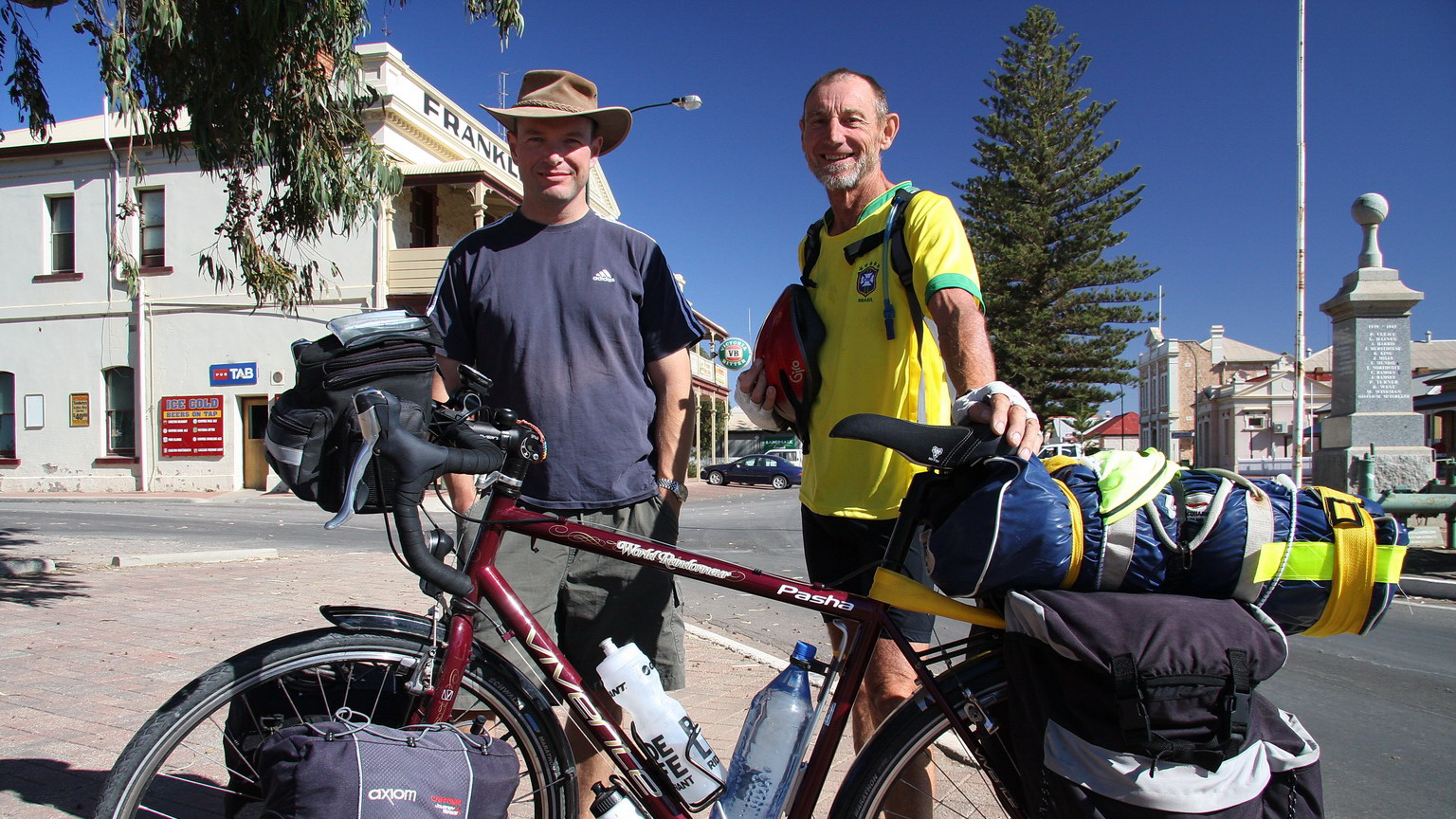 A rather plumpish looking me speaking with an all-around-Australia cyclist in the seaside village of Cowell.
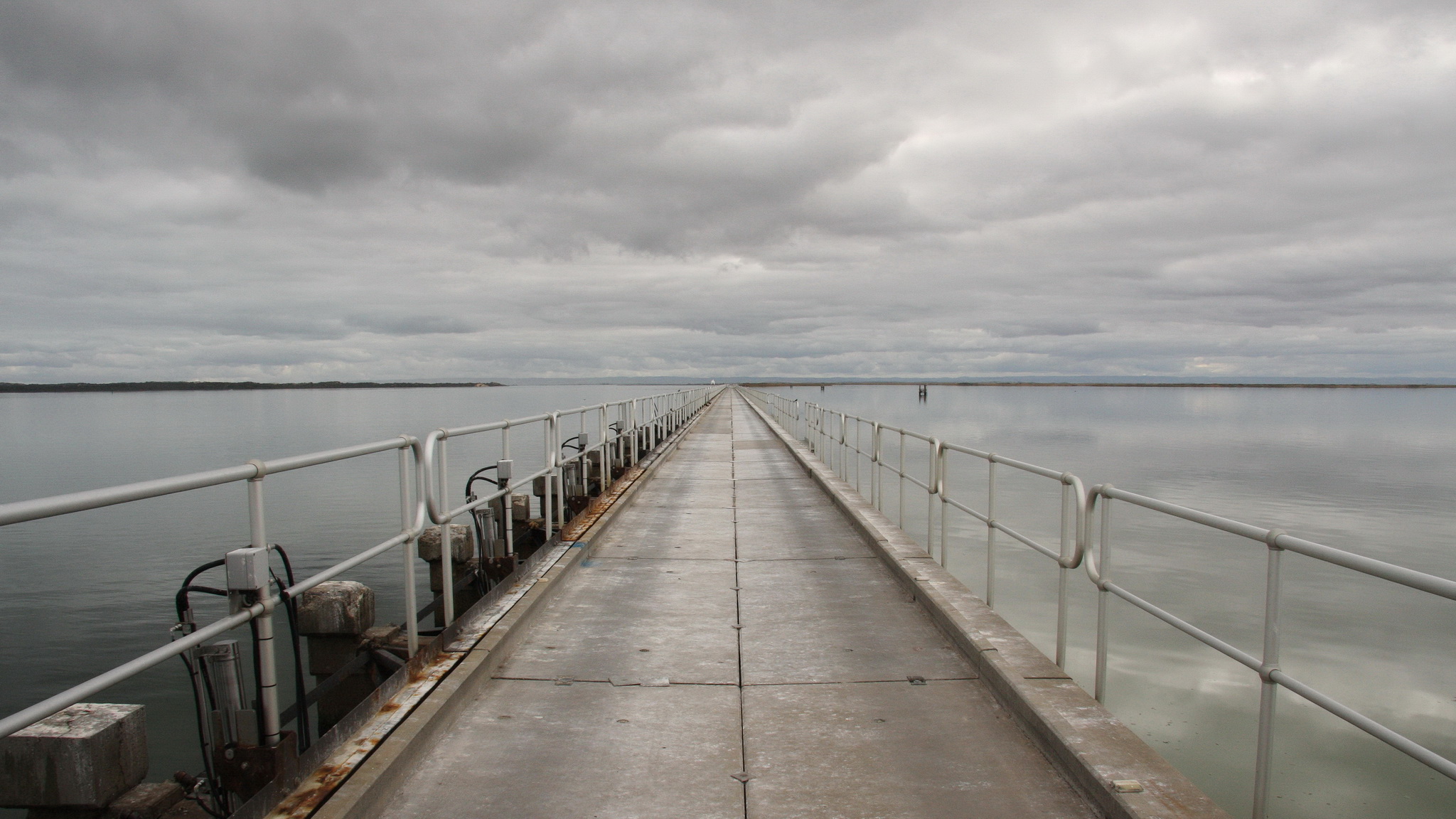
Further up in the Flinders Range, there is this twisty scenic road which cuts across the range from Melrose, a pretty town at the foot of Mount Remarkable and famous for its mountain biking trails, to Port Germain, a very sleepy seaside town with one of the southern hemisphere’s longest pedestrian jetties which seemingly juts out to infinity into the lonely, picturesque, and pristinely blue, Spencer Gulf. Near the top of the range, halfway between the two, is a little sign leading to a local winery a kilometre or two up a side dirt road. We were the only ones there. A small house and a little café surrounded by a charming garden with little sculptures, many of which were depictions of musical instruments. It has been run by a family, originally from Germany, for over a hundred years. Oddly enough, in this little café room in this very secluded out-of-the-way location was a baby grand piano occupying a good portion of it. Just then, the owner of the café, an elderly, tall, rather rustic looking man decked out in denim jeans and a bush shirt, gave us a concert starting out with a bit of Chopin. We ordered some very nice homemade scones and made friendly conversation with his wife who served up the food and gave us some wine tasting.
It never fails to surprise me what little gems one finds in the country and, with so many of these sort of places scattered around in the middle of nowhere, I find it vexing that these places can survive with so little in the way of footfall. I often think to myself when I drive through these little towns and hamlets in the middle of nowhere. What do they do here? How do they survive?
But alas, some clearly do not survive.
There is a road that connects the thriving town of Murray Bridge with another thriving area called the Murraylands, a scenic river basin with several freshwater lakes serving the towns of Loxton, Berri, Waikerie, and Barmera. Meandering around these towns is the sluggish and scenic Murray River, which is fully navigable all the way to its outlet at Alexandrina Lake, a shallow, mysterious, and dangerously choppy lake separated by an impressive barrage from the vast and formidable Southern Ocean.
 Impressive barrage separating the salt water of the Southern Ocean on the left and fresh water of Alexandrina Lake on the right.
Along this lonely two hundred kilometre stretch of road is a string of towns which have all but nearly died except for the small and tidy town of Karoonda, which oddly enough, has a very nice outdoor railway museum. I was the only one there. It was spookily silent except for the rattling of old and rusty corrugated sheet metal in the wind. I slipped five dollars into the museum’s donation box posted at the entrance. It felt a little surreal wandering around and going inside old railway coaches and clambering on lumps of disused machinery.
The other towns along this route have turned into literal ghost towns like Sandalwood, Alawoona, Halidon, and Mindarie. Alongside this road lays an abandoned railway line which, when it was once operational, kept these towns alive. I stopped my car at each of these places and walked about. In Alawoona, I walked up High Street, which, I kid you not, is a little dirt road with some very sorry looking houses in deep disrepair. It would have been perfect for a Wild West movie set if it wasn’t for the mangy looking dog which escaped from the front yard of an old house through a fence that was about to fall down. It came after me and I tried not to make eye contact and slowly walk away but luckily, I was saved by the bell when that dog was beckoned back by an old lady who lived there. A little further down the road on the tarmacked highway, I walked past a cream coloured stone cottage which didn’t look unusual in anyway except for the creepy looking mannequin clothed in a sports outfit guarding the front door. It was eerily silent, walking down these streets, except for the occasional passing of road traffic.
I jumped the barbed wire fence to the abandoned railway platform serving the town. Adjacent were the usual grain siloes, in which grain was fed onto the train for transport. I clambered on the platform and looked up the track bed, which amazingly enough, still had its rails, although they were rusted over. Still, the price of steel that one can salvage these days! I take a selfie of myself and send it to my wife that I was waiting for the next train to Alawoona. All I can hear were the ghosts of the past against the soft wind in which men, women and children would be chattering and alighting from trains hauled by steam engines.
In my journeys across some of these South Australian towns, I’ve certainly come across some quirky things. In the river town of Waikerie, in the Murraylands, during a very hot and windy day, a little sign caught my eye posted on the General Store message board. It said, in red letters,
‘IF SIGHTED
SWARM OF BEES
PLEASE RING 85830229’
I don’t know much about bees, but I certainly wouldn’t want to encounter a swarm of bees but I gathered that there must be some beekeeper who lost it. How they capture and return a swarm must require a very specific skill set I suppose.
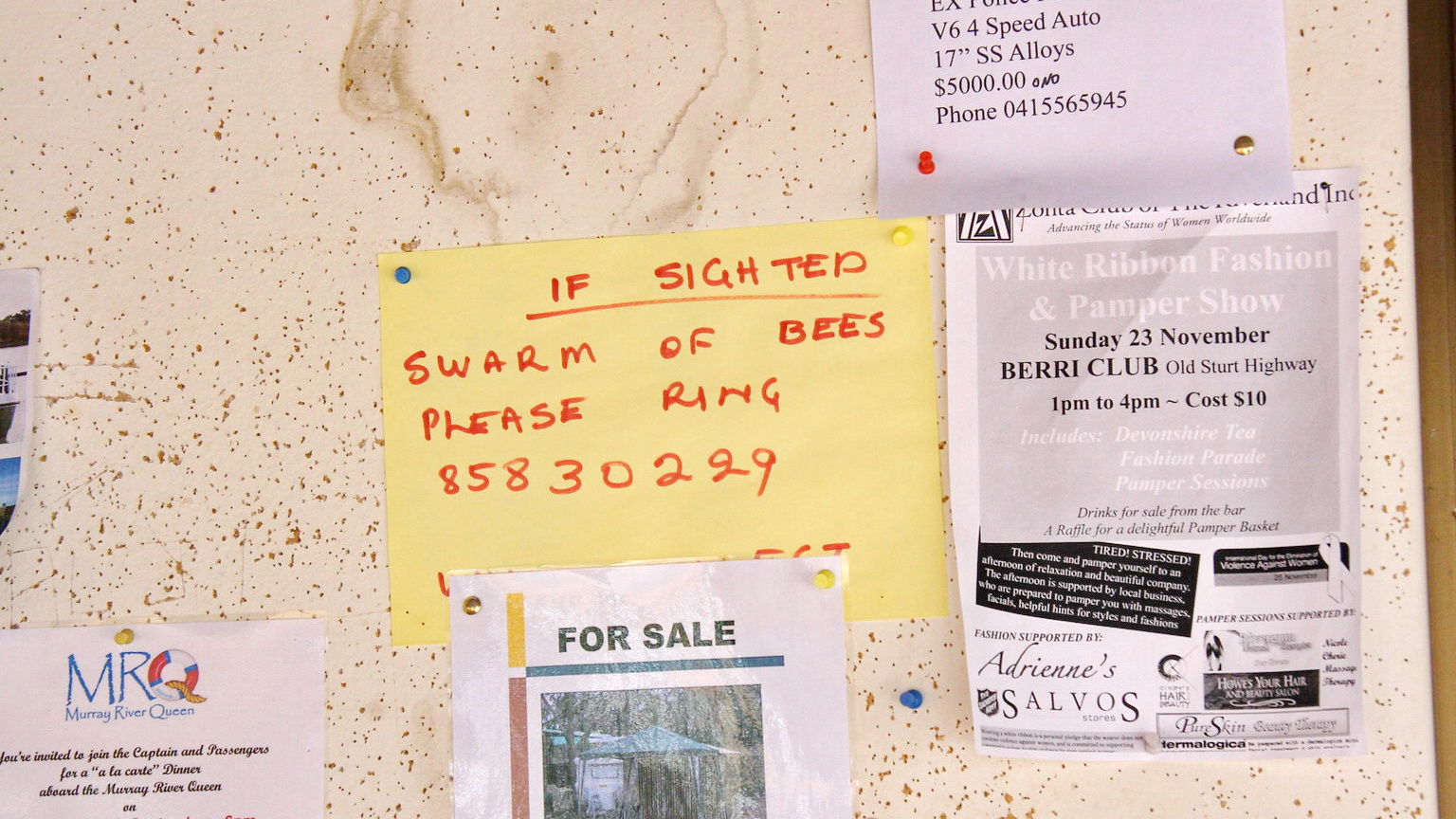 Perhaps this is normal but I found it amusing. A sign posted outside Waikerie General Store.
On another occasion, I stopped by at a strange little town on the edge of the outback called Terowie on my way to Broken Hill. Apparently, it is known for being haunted and, in a way, I can see why. A deserted looking high street which looks like it came out of a spaghetti western. In the middle of town is this creepy museum with old pieces of paraphernalia like jars and tins containing products from a bygone age, bits of old furniture, and rusty signs. The usual stuff. However, what made the place somewhat disturbing is the presence of an old hospital bed and scattered all around the place in baskets and wooden cots, old plastic dolls staring lifelessly.
But what of country people?
Generally, I find them amenable, hospitable, and warming. They may come across as rough around the edges, but they seem to exude more in the way of common sense than most city folk. City urbanites often make fun at the country bumkin set for their lack of sophistication and finesse during dinner conversations, but they do so at their own peril. I’ve had far more interesting chats with those in country pubs than those in upmarket city cocktail bars who really have nothing better to do than to engage in small talk. They also tend to possess a wider gamut of practical knowledge than their city brethren. One has to adopt a broader range of skills in order to survive the countryside, whereas, in the city, the best way to survive is to specialise in a skill to overcome the competition. It’s just a different way of living.
There is a certain sense of freedom and larrikinism in small country towns. Petty rules that don’t really bother anymore are often ignored and the local police tend to turn a blind eye on these minor transgressions. For example, I can take my young son to the local pub and have him sit at the bar. Obviously, he’s not drinking alcohol, but in the city, he’d be turfed out in no time. And silly rules in Adelaide about not being able to drink on the street unless you’re sat down? Doesn’t apply in the countryside. Locals don’t give a rat’s ass about illogical petty rules set by idiotic wowser politicians.
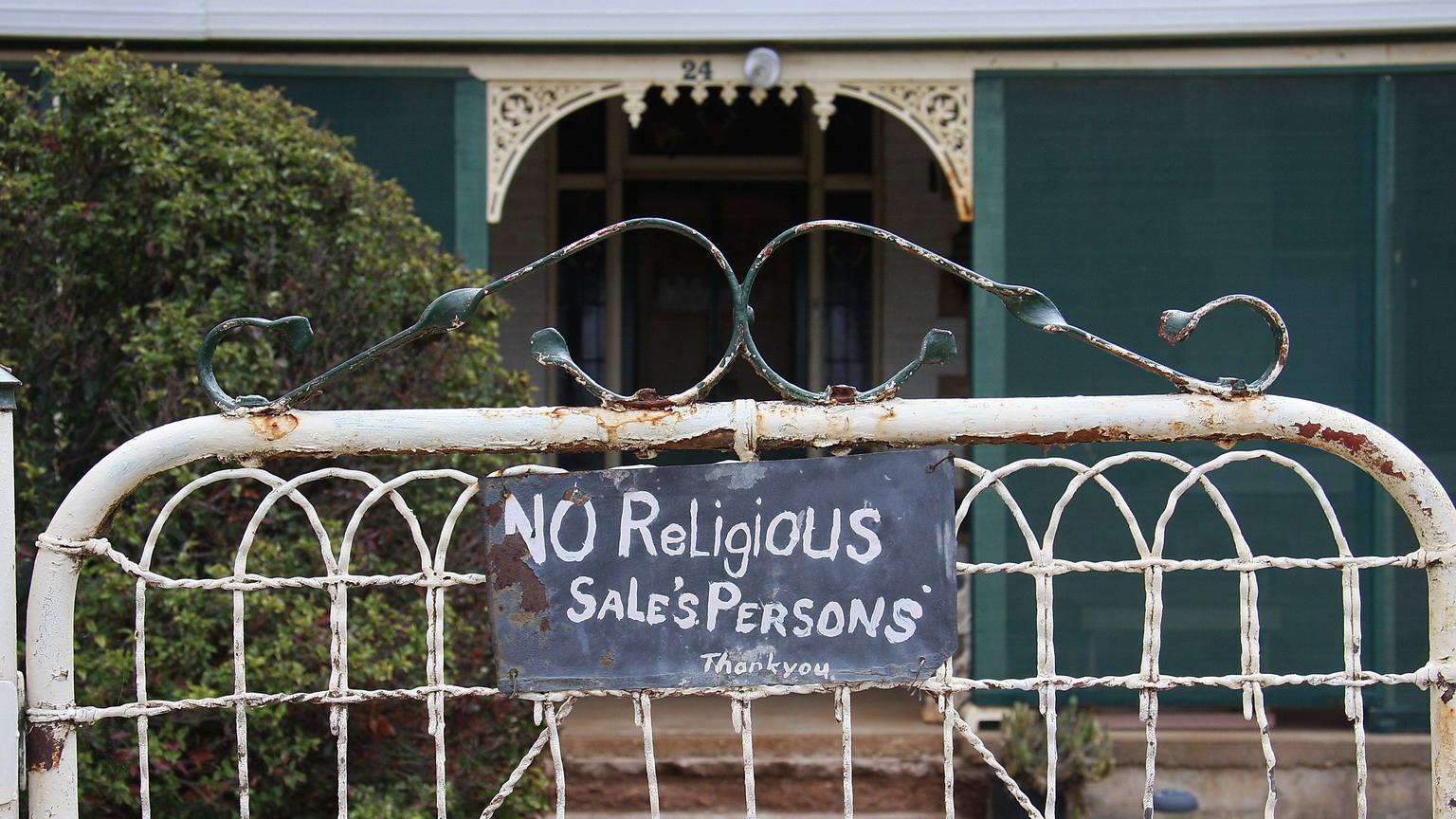 Apostrophe abuse on someone’s gate in Terowie
Many wonder if living in the country is lonely. I would suggest otherwise. Having lived in many large cities across the UK, the US and Australia, unless you make an effort to make friends, the city can make many people feel far more isolated.
The 80s band, The Cure, mentioned this in their lyrics from one of their many sombre songs, Other Voices.
“But I live with desertion and eight million people”
So true. I’ve lived in the heart of London and Sydney for a few years and know how easy it is to be lonely. No one has time for you. But in a small town of a few hundred people, it’s almost impossible to be lonely because people have far more time to socialise with each other.
If I had more time, I could easily spend years going from town to town, taking photographs and getting to know the people who work there. Each town is so incredibly different, as if they belong in a world of its own.
But alas, I need to venture back home to Adelaide.
Once in the city limits, the world completely changes. As if by some act of black magic, I’m surrounded by a moving metal wall of other cars frantically trying to go nowhere. The air quality changes from fresh pine trees and fragrant eucalypts to petrol, diesel, oil, and burning rubber. The return of the hoons and their unwelcome boom box car radios thumping away while sat in traffic.
And woe of all woes.
The return of the traffic lights firmly putting back on the shackles of that feeling of freedom driving.
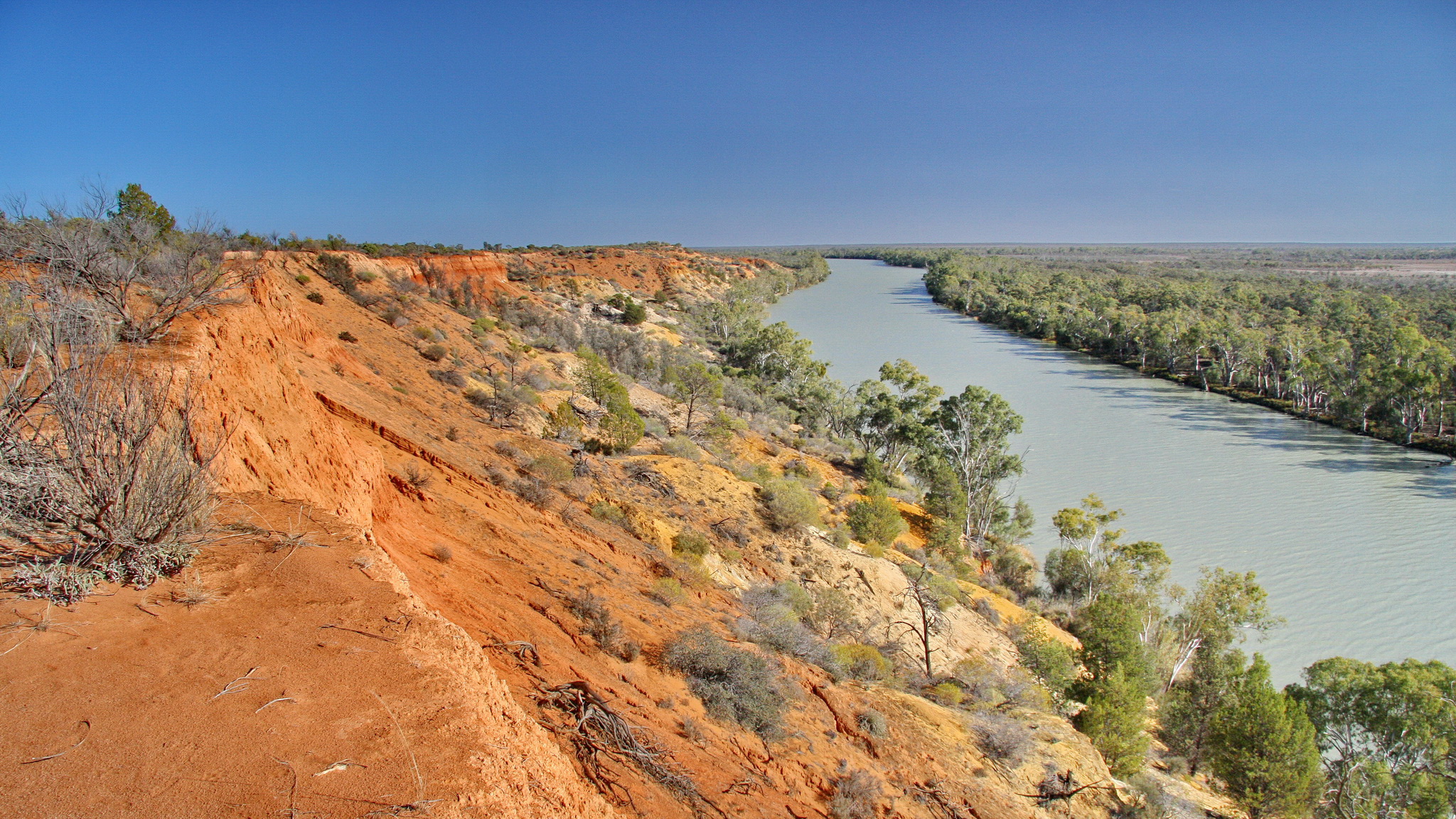 Beautiful Murray River not far from the South Australia and Victoria border near Renmark