Weird and Not Very Nice British Food
Shôn Ellerton, February 13, 2025
Let’s run through some of Britain’s strange food that has a very much acquired taste.
Every country has its foibles, quirks, and peculiarities. But when it comes to food, every country has an interesting story to tell. Especially when it comes to food that others would never think of eating unless they were brought up on it.
Most of our food memories stem from our childhood years. With me, they were spent primarily in the United States and the UK, the remainder being in France. I certainly have fond memories of food from the US and France, but it was during my early UK years in which I have the best and worst memories of food, some of which seem outright weird to others not having being raised there.
Let’s run through some of these foods.
Boiled and soggy mushrooms

Let’s begin with horrible boiled and soggy mushrooms.
British food during the early 80s was, in general, pretty appalling. The British have a knack for cooking vegetables in the most bland and tasteless way possible, some of the biggest offenders being a pot of boiled potatoes with zero seasoning and zero flavour, and one mustn’t forget the overcooked and grey-looking cauliflower and swede dishes.
But it is with mushrooms I had the worst memories of. I like mushrooms now because I know how to cook them properly, which is being fried with butter until golden brown along with some cream in it. But if you were ever coerced into eating mushrooms as a kid in the UK, you might have remembered the black soggy mushrooms having been boiled in a pot sitting there in a stinky greyish pool of water. Incidentally, it was my late father who forced me to eat them!
This was the typical way of cooking mushrooms during 1970s and 80s Britain and it was enough to put off anyone for life in eating mushrooms. Still, to this day, my sister won’t touch any mushroom.
SPAM
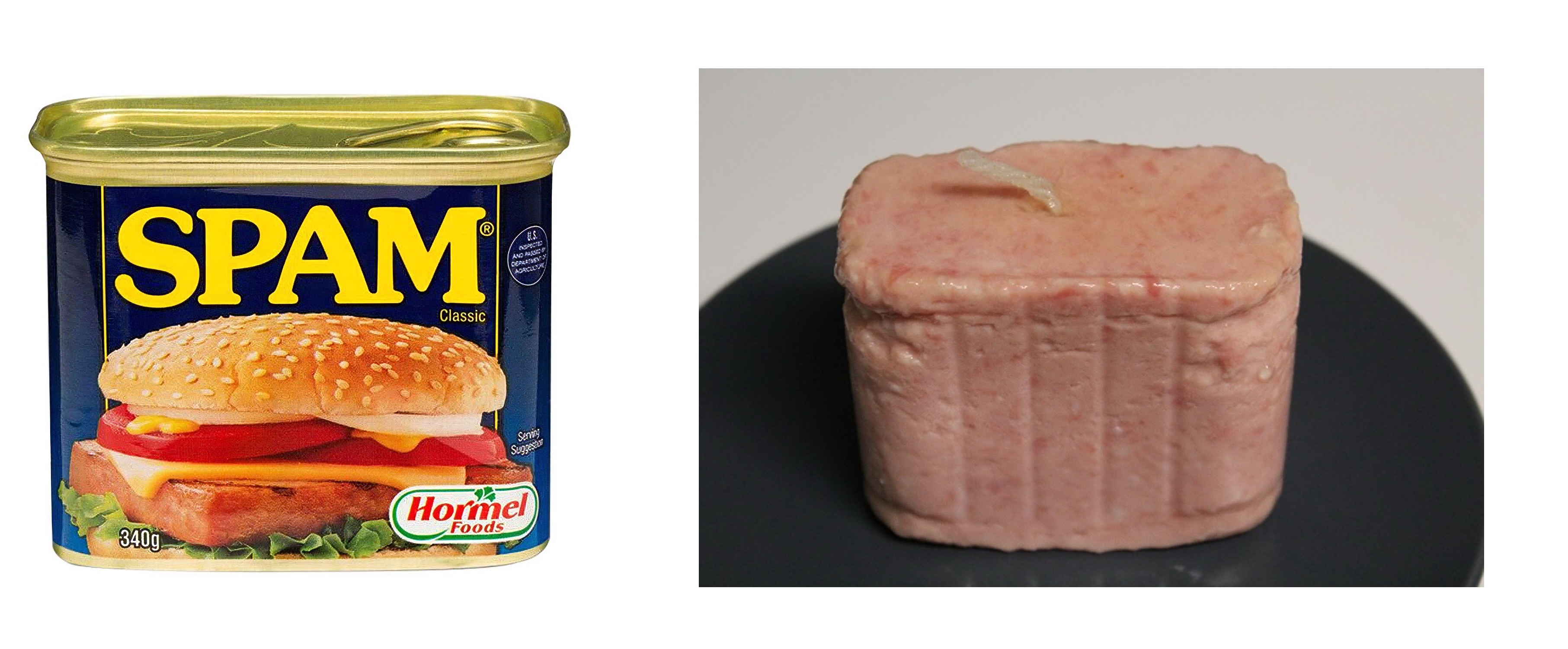
Another great offender in the British grocery shop is its preserved and processed tinned luncheon meat known as SPAM which, as I understand, stands for Spiced Ham, although I can think of far more appropriate acronyms to describe this strange tasting meat with an unpleasantly dogfood-like texture.
I find it surprising that this food, which was once one of those foods used during times of war and food rationing, still has high demand and selling well. And the smell? As soon as that tin is opened, you get that meat fart smell which evokes all those horrid memories for me. Monty Python Flying Circus fans would appreciate the sarcastic song sung by Vikings in a British café.
‘Spam, Spam, Spam, Spam, Spam, Spam, Spam, Spam, lovely Spam! Lov-e-ley Spam!’
Shippam’s Bloater Paste
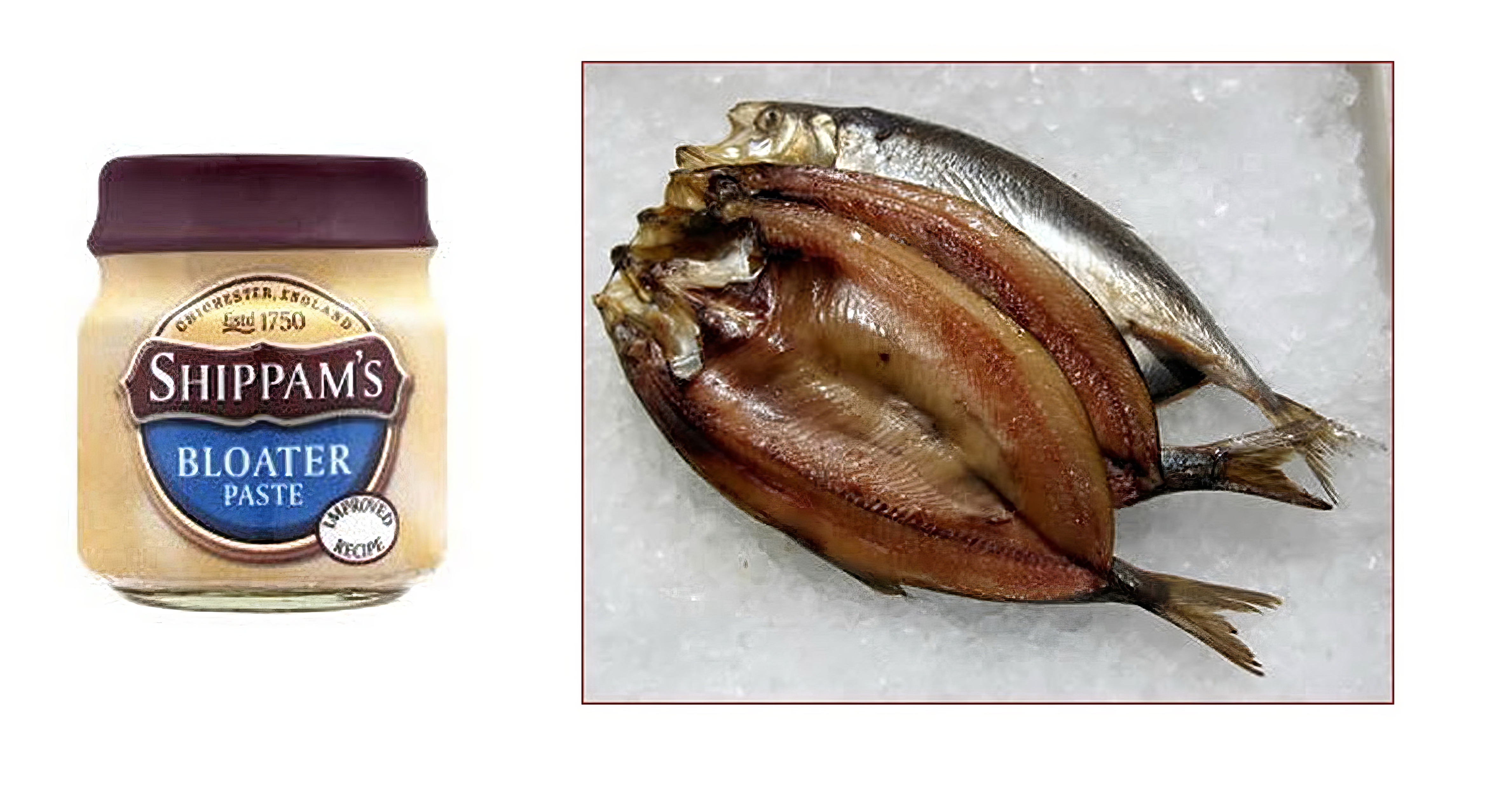
Now, let’s get into smelly fish stuff, and one that springs to mind is bloater paste, a sandwich spread kind of thing.
Many of us may not know what a bloater is.
It’s essentially a cold-smoked herring, much like a kipper, except it is smoked whole with all the guts in it. Apparently, it gives a much more gamey taste than straight-up kippers which is, undoubtedly, quite strong tasting and pungent. As for kippers, I’ve always loved them served with hot melted butter for breakfast, which, I contend, must be a peculiar dish for many westerners.
It’s an ancient recipe in British cuisine, but bloaters were crushed up into a paste, pickled and put into small little glass jars. It’s not unlike the texture of liver pate.
This is clearly a food which is either liked or intensely disliked, much like Marmite or Vegemite. It is spread onto pieces of buttered bread and often enjoyed during one of those typical British picnics carried within a wicker basket, many of which I had with my grandparents during my childhood years. My grandmother had all these different little jars of Shippam’s paste including shrimp and salmon, bloater, and classic crab, whatever that was. She used to cut thick slices of white bread and then wedge in a slab of butter followed by a good smattering of Shippam’s paste.
Funny thing is that I still like Shippam’s paste, much in the same way I like pate.
Would you like to try?
Cold and burnt buttered white toast
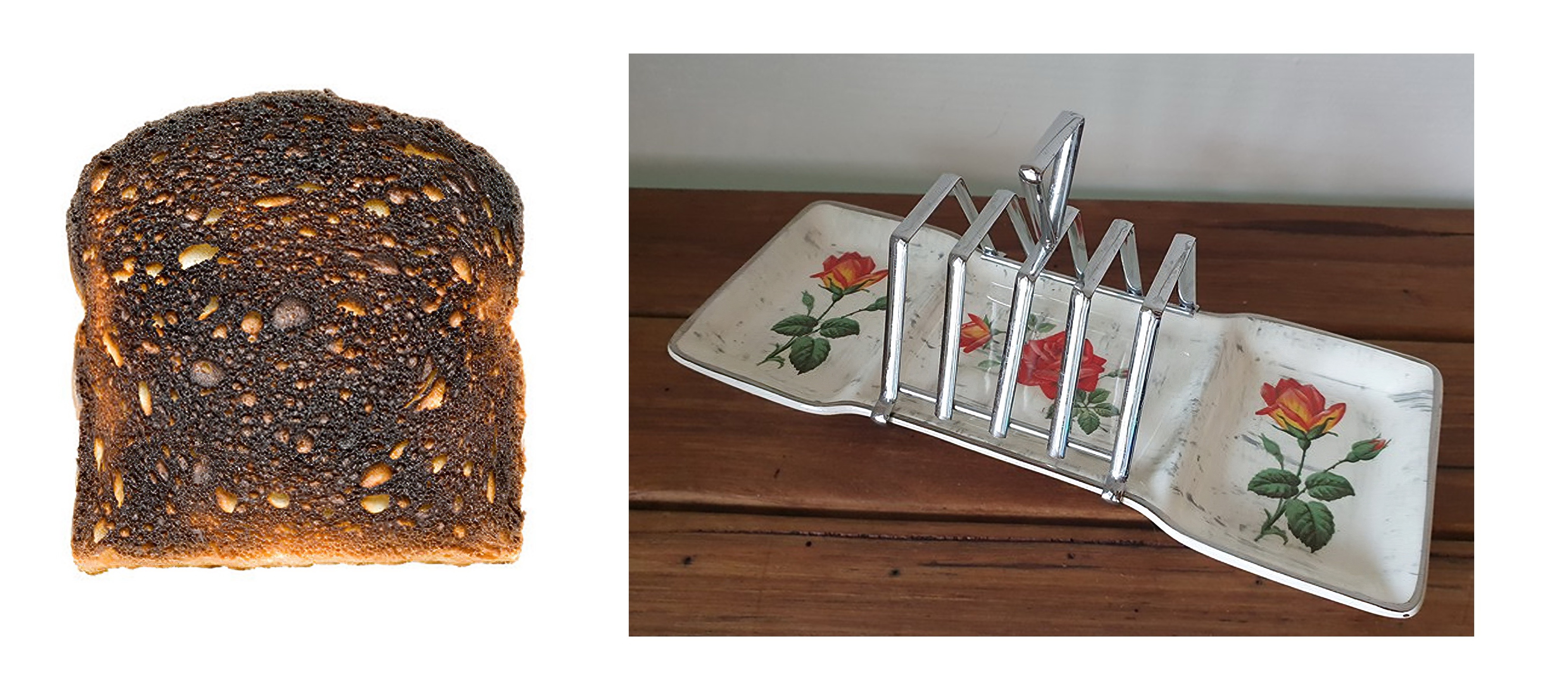
Going back to the breakfast theme, let’s talk about toast.
Being partly raised in the United States, I remember the way that toast was done for breakfast in restaurants. Soft, buttered, thick and kept warm under a cloth. This is the way that most Americans, and probably most people in the world, like their toast served.
But not in England.
I remember staying at many a Bed & Breakfast which always included a cooked breakfast, which was either the typical Full English, kippers, boiled eggs and soldiers, or poached eggs on toast. However, the English are famous for serving toast in metal toast racks. Think of a wire-framed magazine holder in a doctor’s waiting room which holds magazines in a vertical position. Now, make it smaller, so that it fits onto the breakfast table, and then insert slices of toast in each slot.
Toast racks do precisely the opposite in keeping toast warm and fresh. They seemed to have been explicitly designed to make your toast go as quickly cold as possible. Things might have changed since then, but the only option you had for toast was thinly sliced white bread or this cardboardy woody flavoured brown bread which was always dry and tasteless. Often I remember some of the pieces of toast being under-toasted while the remainder in the rack was burnt.
The butter was always hard in little sachets that came out of the fridge, so no chance on easily spreading it on your toast. And the toast, having lost its initial head almost immediately in the toast rack, you wound up having to grip the butter in your hands to warm it up before unravelling the foil.
Now this is the funny thing. I love cold burnt toast with cold hard butter along with those little flakes of carbon that get stuck in the butter when trying to forcibly spread it without breaking the toast. I think most would disagree with me, except, perhaps my sister, who also seems to enjoy this way of eating toast.
Fish and Chips with peas and soggy chips

Let’s go back to the world of fish!
I would declare that most of us would have had, at some time, fish and chips. Classic fish and chips with a crispy batter surrounding a lush juicy fillet of fish served alongside a pile of crispy hot chips or French Fries.
I enjoy fish and chips, but the British have had a very peculiar method of serving them, to which the British seem absolutely normal.
Back in my childhood in the UK, I certainly remember fish and chips being wrapped in newspaper, although, to be fair, there was an underlying wrapper which, presumably, protected the fish from newspaper ink being absorbed into the food. But, having enjoyed crispy fries from the rest of Europe and the US, the British seem to love their thickly-cut soggy chips splashed over with a generous helping of vinegar making it even more soggy.
To this day, I don’t like soggy chips, and, in case, I’m not a big consumer of potatoes anyway and I don’t particularly like vinegar in overpowering doses. However, a thin crispy French Fry properly done in good quality oil is quite difficult to resist. Now why the Brits couldn’t adopt the shoestring crispy chip like what they do in Belgium, for example, is beyond me. But there we have it.
The other peculiar thing the Brits like with their fish and chips is mushy peas. As a sort of experimentation, I served this at home recently, having made my own mushy peas. It didn’t go down all that well, however, I think there was a general consensus that it tasted pretty good. After all, it had cream and butter in it! But the texture is too far out there for those not being raised up with mushy peas.
From a practical point of view, mushy peas solve the problem of trying to balance peas on a fork and stop peas from escaping, but where mushy peas so often goes wrong is when they are made from old peas, or worse, minted peas, which are essentially made from not-very-good peas fit only to be given a flavour of mint added to them, supposedly to hide the stale flavour. You can find these culprits in the frozen section in the supermarket.
Don’t buy minted peas because you’re being scammed.
Marmite, Bovril, and all these horrid yeast extracts
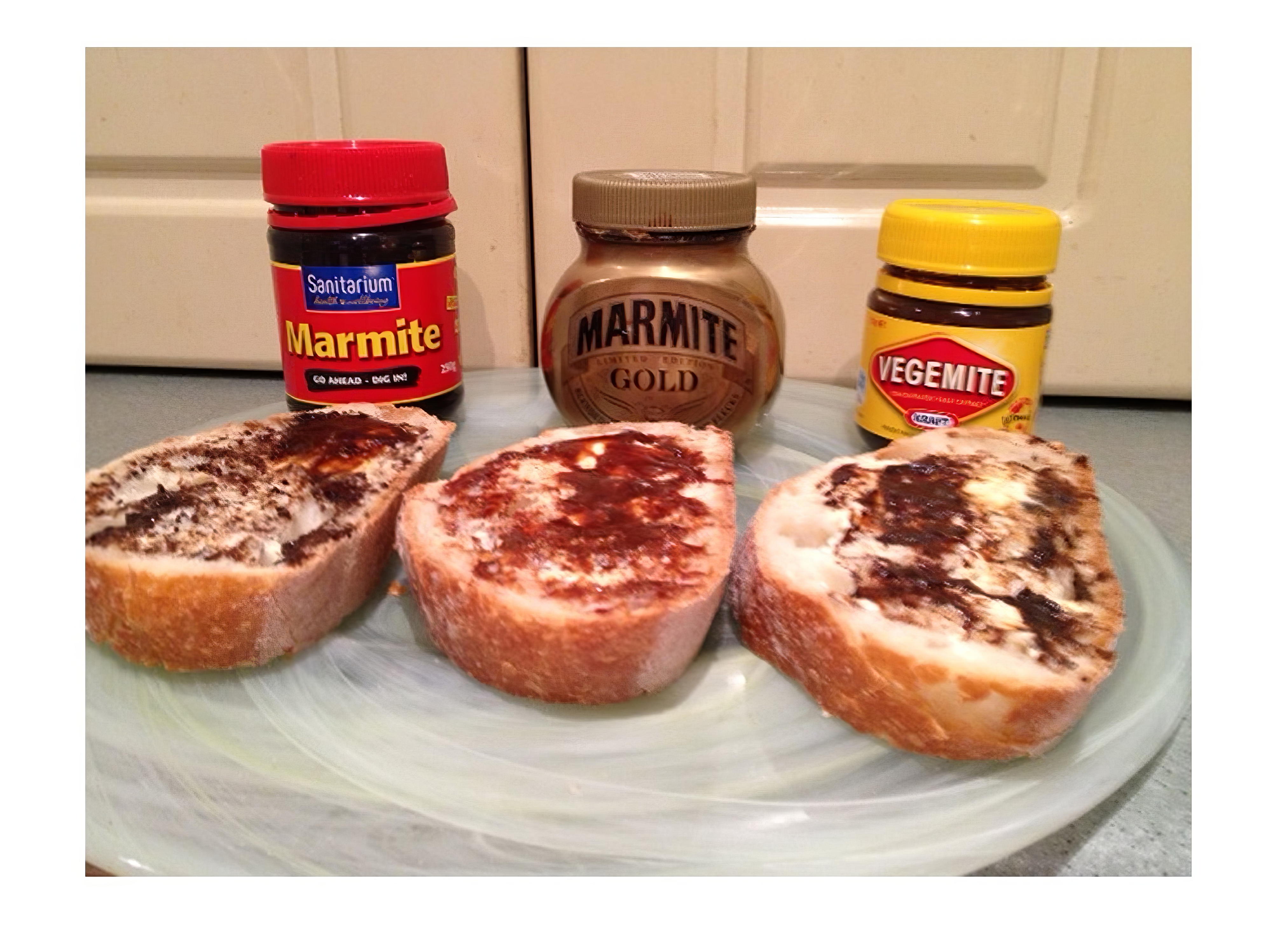
Let’s move on to possibly the most polarising of all foods.
Marmite!
If you’ve never been brought up on Marmite, you will probably never like Marmite. And that includes all the gamut of similar products like Bovril, Vegemite, Promite, Mighty Yeast Extract, and any jar simply named yeast extract. Marmite and Vegemite afficionados will double down on their defences and sternly explain to you their huge differences in taste and try to convince you to like one or the other. It’s like trying to convince someone who hates mustard into eating Dijon mustard, because it’s nothing like English Mustard. I’ve had the spiel many times! I don’t like mustard, or any of those similar condiments like horseradish and wasabi, unless in very small doses in cooking.
Marmite, in very small wafer-thin doses, can add some good flavouring in savoury dishes, but no way do I find slapping a layer of black sludge on my bread remotely appealing.
Interestingly, the Australians love their Vegemite, but most are not real fans of Marmite. However, it seems that most British don’t find Vegemite too offensive at all, but dismiss it as being a mere ersatz antipodean substitute.
Marmite left its mark with TV advertising as well. There were a series of refreshing and highly funny British TV ads which capitalised on how polarising Marmite is. One portrayed a woman chasing this guy down the road with a piece of bread spread with Marmite. The guy was running for his life but the woman caught up with him and wiped his mouth with it leaving an expression of disgust and horror on the man’s face. The punchline of the ad was,
‘You either love it or hate it!’
The British were always the best with TV advert originality.
Thick slices of liver and chunks of kidney
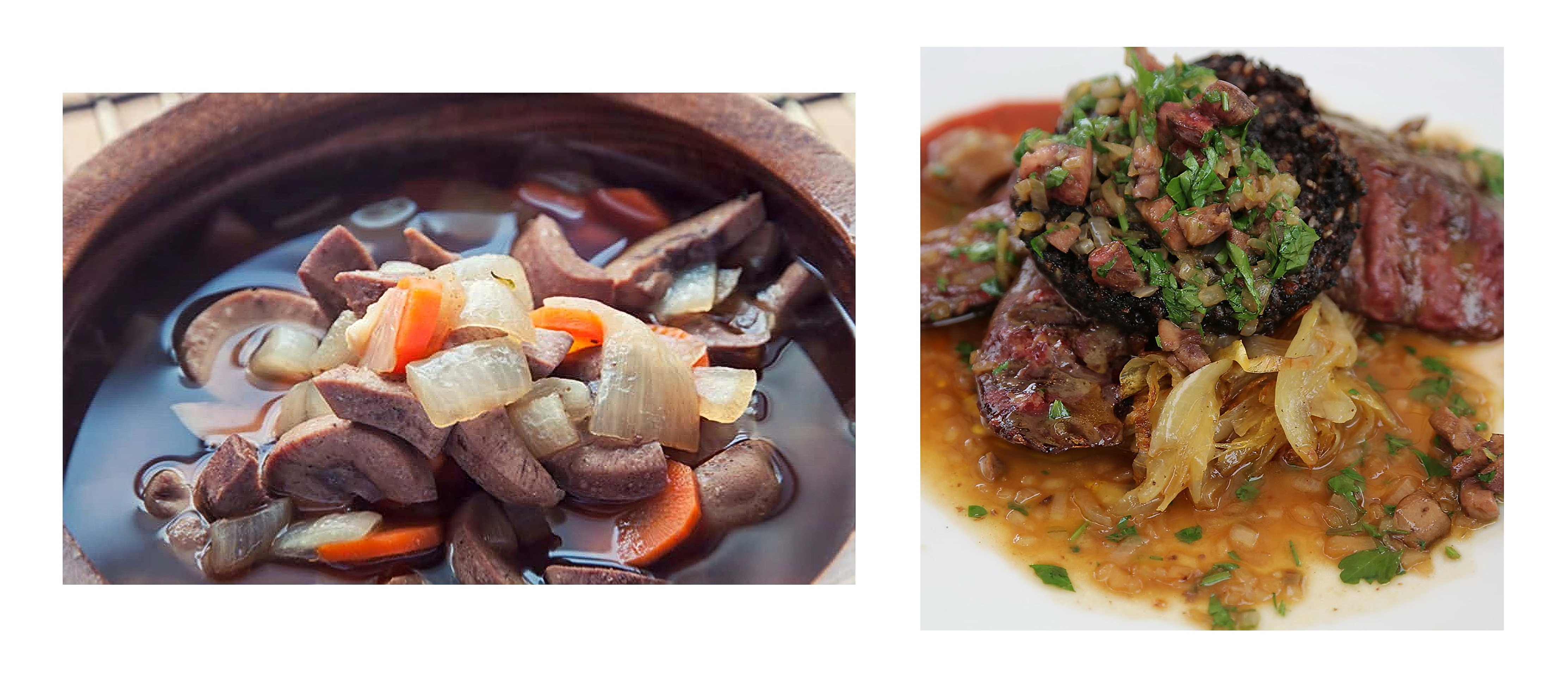
Moving on to meat, let’s review the British obsession with offal.
In general, I am not a big fan of eating liver, kidneys, tripe, brain, stomach, intestines, and other parts of the animal which have very peculiar and strange funky flavours with weird textures ranging from spongy to rubbery. Saying that, I’ve had some liver, thinly sliced and grilled, served up in an Italian restaurant, which wasn’t entirely bad. Although I drowned it with a big dollop of mashed potatoes to tone down the taste and texture.
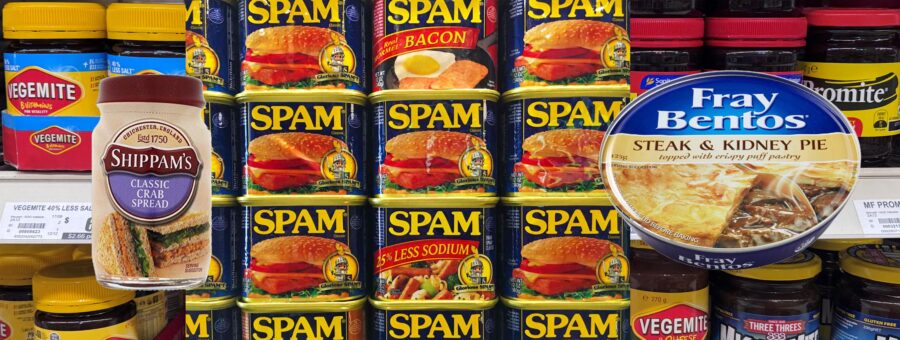
I remember liver in the UK being served in thick chunks, some of them decidedly undercooked and rare, which is utterly horrid in my opinion, and I would guess, for most. As for steak and kidney pie, I used to have an old British favourite, a puff pastry Fray Bentos pie in a tin which you opened prior to putting in the oven. On one occasion, my father had put one in the oven without opening, and subsequently, it blew up like a depth charger coating the oven entirely with bits of steak and kidney pie. I enjoy the Fray Bentos range of puff pasty pies in a tin, but please, leave out the kidney.
Pickled onion, beetroot, and pub grub

Moving on to the pub, leaving out the Brit’s predilection on drinking warm beer, we need to talk about what horrors lie in pub food. I would say, arguably, that pub food had got a great deal better since the 80s, but also, a great deal more expensive as well. We all knew pub food as ‘pub grub’ for good reason.
I remember piles of floppy, soggy, thin white-bread sandwiches with a molecularly-thin slice of ham or cheese, spread with mustard, pickle and butter. Here’s the key thing. Ordering ham and cheese was simply too much for 80s pub food and most Brits would have considered you delusional if you decided to be this indulgent. Now, my grandfather, having been born and raised in England, went on his first US trip during the 1930s or so, if my memory serves me well. On landing in New York, he asked for a dozen sandwiches in a nearby bar. The server was undoubtedly surprised and replied that, perhaps, he should try just one sandwich first. Having also been raised in the US, I think all of us can agree that the Americans make the world’s best sandwiches, my personal favourite, being the Reuben, a corned beef and sauerkraut sandwich with melted Swiss cheese. Imagine this in the UK during the 80s?
But there are two other foods commonly found in the British pub which I find unfavourable.
Pickled onions and pickled beetroot.
These two foodstuffs can only be liked by those who were raised up as a child on them. Even so, I had many years in the UK as a child, and I remember going to some of my schoolfriend’s houses for dinner and being served sandwiches with pickled beetroot in them. I never liked pickled beetroot and I never will. Bright purple vinegary beetroot juice bleeding over all my food. And pickled onions from a jar? Yuck.
This put me off beetroot for years until I found that baked beetroot and beetroot in the Russian soup dish, borscht, is actually nice.
Incidentally, regarding picked beetroot, the Australians took on this bizarre food even further, when horror of horrors, they like injecting slabs of beetroot and pineapple along with bacon, egg, cheese, and salad in their all-in-one burgers, known to Aussies as The Lot. I guarantee you that if you order anything with The Lot in Australia, you’d be guaranteed a slice of pickled beetroot in it!
And so many more
 Eel and mash and Chinese century eggs
I could write considerably more about the vagaries of British food ranging from powerfully pungent candy like Fisherman’s Friends to slimy eels and mash served up in an East End café in London.

The intensely foul fermented shark called Hakarl and the decidedly strong tasting Fisherman’s Friend
There are, of course, other countries around the world with very strange and unpalatable foods ranging from China’s disgusting cheesy century eggs to Iceland’s most foul hákarl, a deranged recipe involving six months’ fermentation of polar shark with an ammoniac smell strong enough to rip off the Gates of Hell.
But I must stop here for now and prepare a meal of sausages with thick skins and Brussels sprouts!